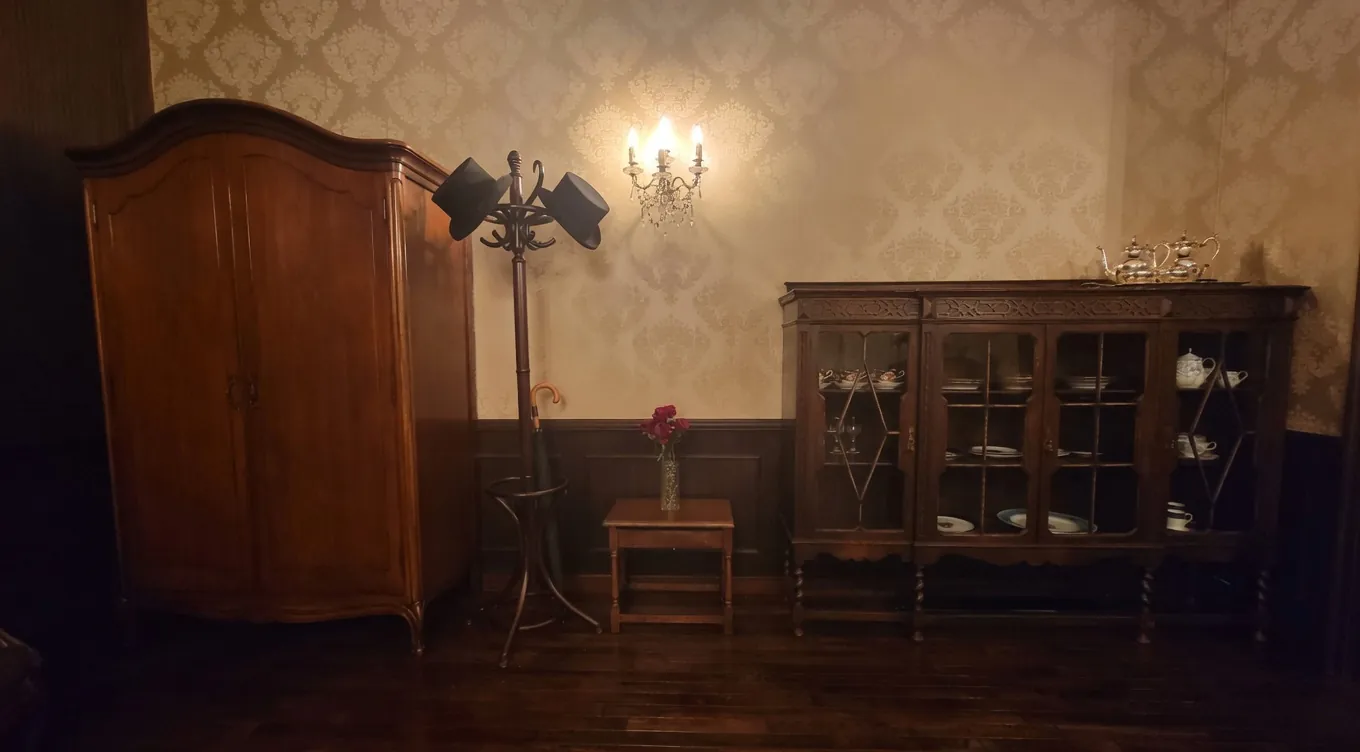
Materials and furnishings that tell the association's history and the lineage of butler culture since its founding
Our History — Since 1890

A Lineage Handed DownAcross 135 Years

Since its founding in 1890 (Meiji 23), the association has walked a long road in the development of butler culture in Japan.

Fusing the Western tradition with the Japanese spirit of hospitality, we tell the 135-year story handed down through three Presidents.

I. Prologue

What Has Been Handed Down

The butler took root in Japan 135 years ago. The association's history begins in the modernization of the Meiji era, continues through postwar nationwide growth, and passes through division and reunification to the present.

It is the journey of a single ideal, handed down while changing shape with each age.

What changed, and what did not — the methods of training and the very form of daily life have shifted with the times.

Yet the founding resolve, to bind Western discipline and dignity together with Japanese etiquette, has been kept without a single break under three Presidents.

On this page we trace the journey from the founding years to the present, chaptered by the eras of Meiji, Showa, Heisei, and Reiwa. Alongside the events of each year, we tell what the association held dear at that moment.

Founded
1890
Heritage
135yrs
Presidents
3
Reunified
2000
II. Chronicle

A Journey in Four Chapters

We trace the association's 135 years across four eras — the founding years of Meiji, the growth of Showa, the reunion and renewal of Heisei, and the succession of Reiwa.

Each chapter recounts what the association held dear in that age, followed by a timeline that revisits the milestones one by one.

I

The Founding

1890 – 1923

The association's history begins amid the modernization that followed the Meiji Restoration.

As Western culture flowed rapidly into the country, founder Shingo Tanaka brought back the conduct and spirit of the butler he had studied in Britain, resolved to establish authentic butler service in Japan.

To bind Western discipline and dignity together with Japan's refined etiquette — that fusion was the ideal the association first raised.

The founding years were devoted not to importing manners, but to shaping a distinctly Japanese idea of the butler, one attuned to daily life here.
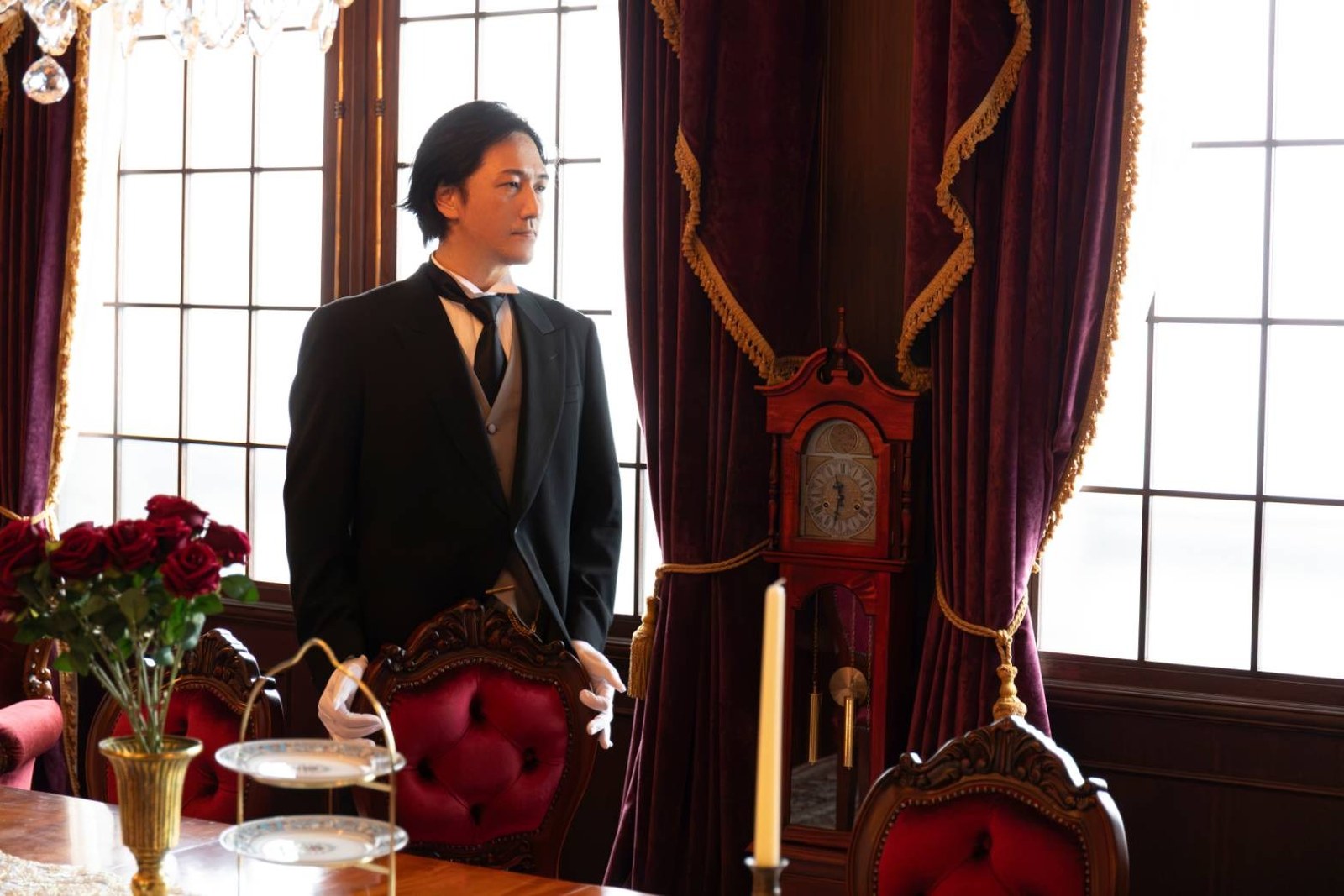
A butler standing behind a chair in the dining room of the butler salon
1890

Foundation of the Association

Shingo Tanaka founded Japan's dedicated institution for butlers, raising the ideal of cultivating butlers who combine Western service with Japanese etiquette.

1903

The First Training Program

The first systematic butler-training program opened, pairing classroom study with hands-on practice to establish a unique curriculum fusing Western service manners with Japanese etiquette.

1923

A Code of Conduct

The association codified its own code of conduct and quality standards, systematizing the principles of etiquette, confidentiality, and bearing — the foundation for later education and certification.
II

Growth & Reach

1935 – 1985

Upon the foundation laid in the founding years, the association deepened the very quality of its education.

It progressively refined a training system that integrated Western service manners with Japanese etiquette, raising the standard of butler cultivation another degree.

In time, activity spread beyond Tokyo to regions across the country.

Providing service suited to each region's character while weaving a nationwide net of talent development — the growth era was the age in which the association matured from a point into a plane.

As the association spread across the country, a gap opened between east and west in how the conduct and the teaching of the butler were understood. Neither was wrong; each had been honed for the clients of its own region.

In time, however, that difference became a wide division of opinion over the direction of the association, and in 1955 it chose to divide into the Kanto Butler Association and the Kansai Butler Association.

Even after they parted, the two associations went on training butlers in their own manner. The renewal of training methods and the ordering of quality standards alike were pursued by both in parallel.

Standards diverged while both still bore the name of butler — and that divergence would become the task the next generation had to resolve.

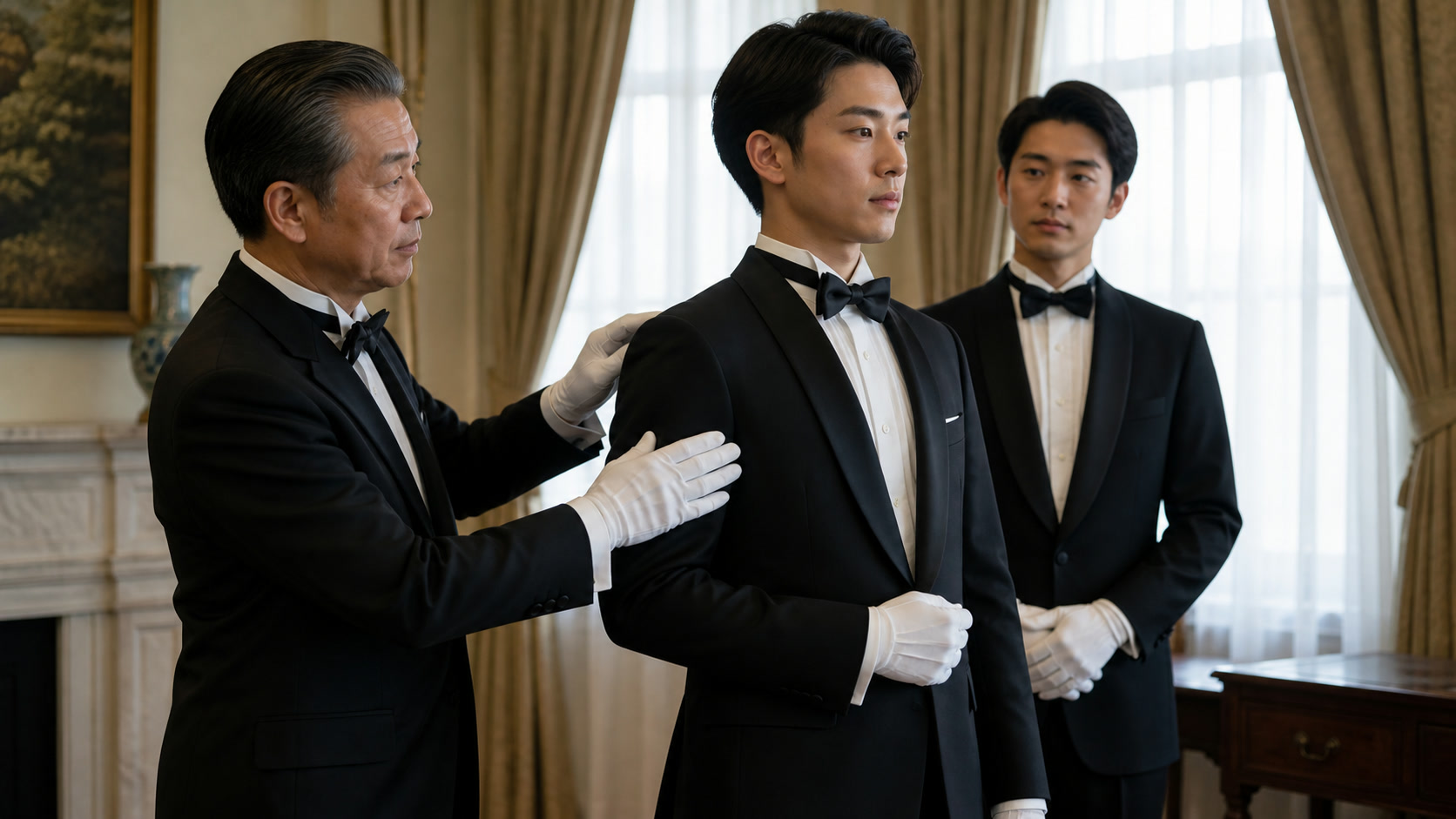
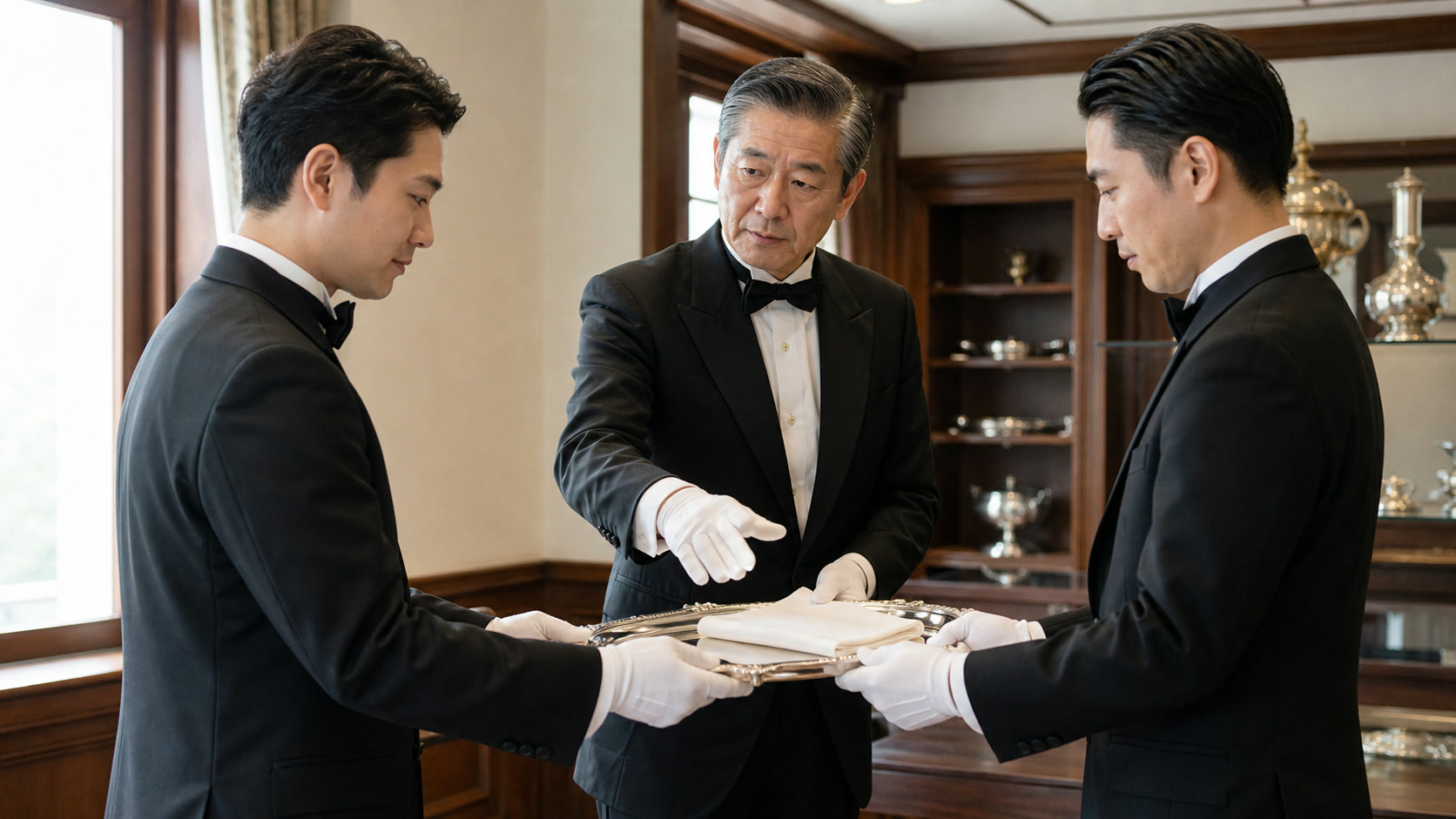
Japanese butler trainees practicing precise handover technique with an instructor in a growth-era training scene
1935

Reorganized Training System

The training system integrating Western service manners with Japanese etiquette was fully reorganized, establishing a stepped curriculum of study and practice that raised the quality of cultivation.

1955

The Association Divides

Differences of opinion over the direction of the association led it to divide into the Kanto Butler Association and the Kansai Butler Association.

For more than four decades the two trained butlers in their own manner, each building standards rooted in its own region.

1970

Modernized Service

Each of the two associations introduced new training methods to modernize butler service, building a system of talent development that met the needs of the times while preserving tradition.

1985

Nationwide Expansion

Both associations expanded service across their regions on a nationwide scale, each defining its own unified quality standards and introducing the prototype of the later certification system.

III

Reunion & Renewal

2000 – 2020

The four decades of division were years in which each side raised its own education and its own standard of quality. They were also years that carried a contradiction: the same title of butler, held to different measures.

In 2000, the second President, Kazuhiko Yamada, closed that gap.

The manners of both sides were set against each other and, one by one, it was decided what to keep and what to amend — and at the end of a long dialogue the association became one again.

The nationwide standards of quality and the training system in use today were born of the accord reached at this moment.

That setting-against took so long precisely because, across more than four decades apart, each side had built something sound.

Kanto had honed the conduct of reception — the bearing with which a guest is met, the reading of precedence and of distance, the unobtrusive way of moving that keeps the master in good standing — refined in the setting of formal occasions.

Kansai had raised a fine-grained attentiveness rooted in the life of the merchant house — anticipating the day's requests before they are spoken, and leaving not a hair's breadth of looseness in the handling of money and of who comes and goes.

Neither was worth discarding; neither would be surrendered. That is why it was necessary to confirm, one by one, which gestures to keep and which procedures to amend.

Reunification meant more than binding an organization together. By aligning quality standards and the education system as one across the country, the association could guarantee an unchanging standard of the butler in any region.

The foundation of the present-day structure was shaped in this era.

With the foundation set, the association broadened the depth of its service. More specialized offerings, a renewed education program, expansion to more regions — two decades of quiet renewal layered upon carefully guarded tradition.

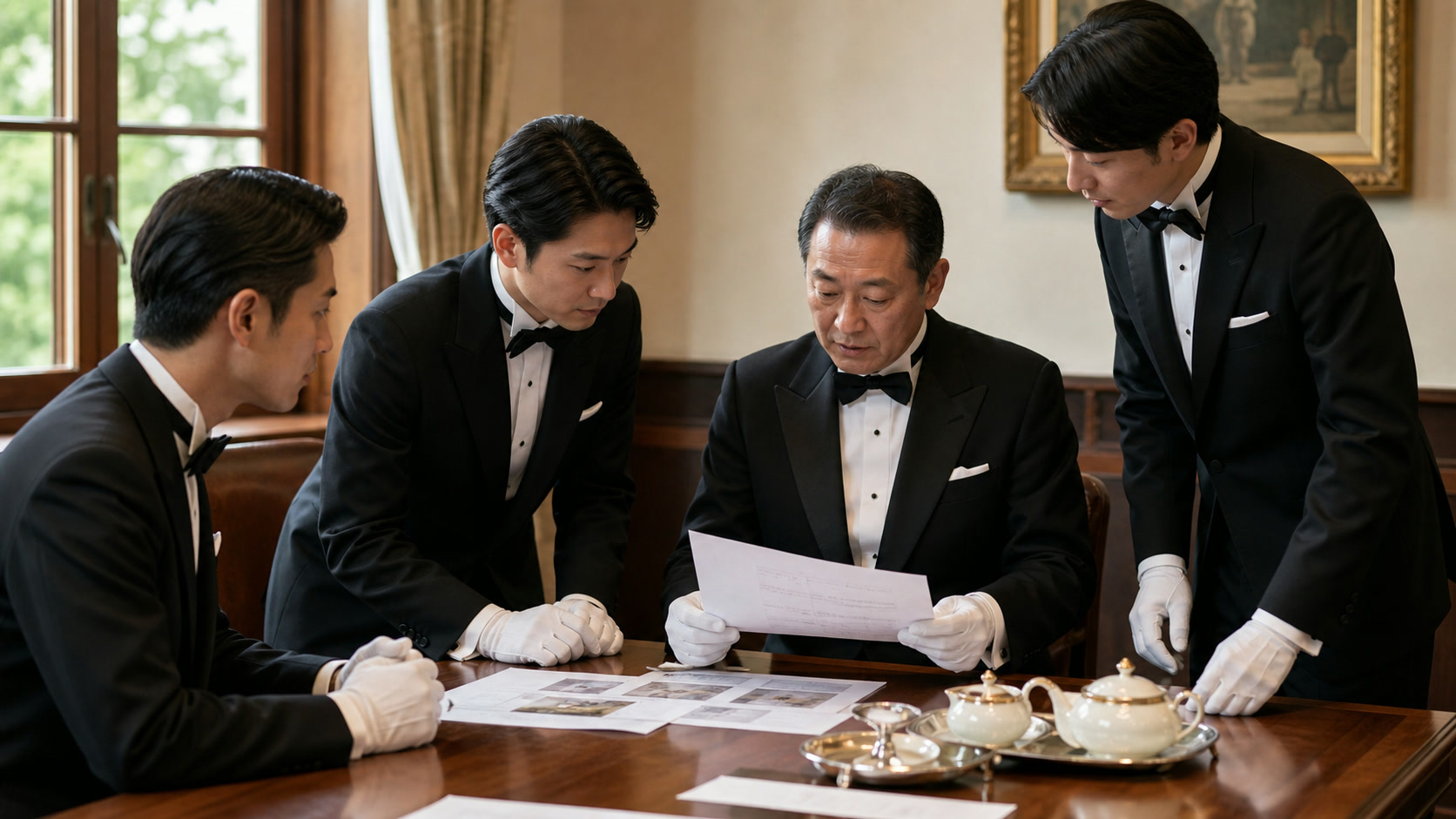
A Japanese butler team briefing around a table under shared service standards after reunification
2000

Reunification

The previously separate Kanto and Kansai associations reunified. Led by second President Kazuhiko Yamada, unified nationwide quality standards and an education system were established, setting the foundation of today's structure.

2005

Expanded Specialist Service

More specialized service was developed to meet the requests of private occasions and corporate clients, advancing the cultivation of butlers able to respond to a wide range of settings.

2008

Renewed Education Program

A new curriculum was introduced into the butler-training program, raising the quality of service further and enriching the certification system.

2016

Reaching More Regions

Alongside expanded service in major cities, the association began earnest expansion to more regions, advancing the spread of butler culture suited to each area.

2020

Contactless & Online Support

Contactless service and online support structures were put in place, building a system that responded flexibly to new ways of living while preserving cultivated manners.

IV

A New Chapter — An Age in Which Butlers Are Chosen

2023 – Present

The accession of the third President became a quiet turning point for the association.

What the two preceding Presidents had guarded was a manner of working in which the butler never appears before the world, serving unseen, and meets a client only through a trusted introduction.

That pride was long the backbone of the association; it was also an age in which those who needed a butler had no way of finding one themselves.

What the third President, Butler Bell, raised was a single phrase: an age in which butlers are chosen. Publish the register of serving butlers, make the fees plain, and open a channel through which a request may be made without any introduction.

It was a decision to open, from the inside, a door that had long been closed. Then, in February 2025, the association was ordered anew as a general incorporated association.

It is also a fact that opinion within the association divided over that decision.

Those who had long supported the association held that the butler's true calling lay in the manner kept until then, while those who read the change of the times agreed with the third President's course.

The discussion was carried through to its end, and there are those who took a different road. Even so, the third President chose this path so that the work of the butler might be handed to the next hundred years.

What each side sought to protect was the same. The pride that those who departed sought to keep is also something the association has inherited. With that respect held close, we take the first steps of a new butler association.

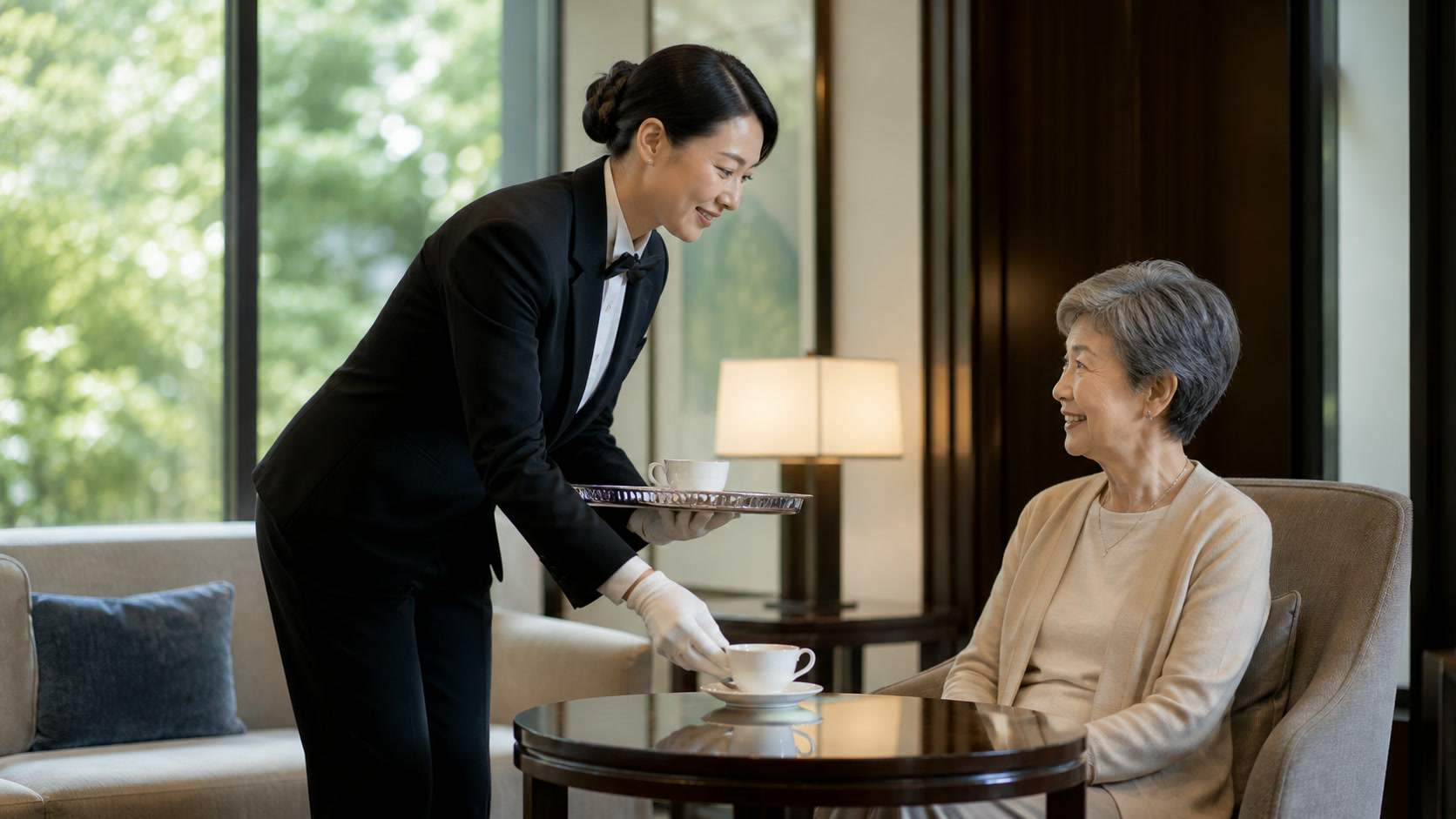
A modern Japanese butler serving tea indoors while carrying tradition into contemporary life
2023

The Third President

In March 2023, Yuichi Ishii (Butler Bell) became the third President. Raising the banner "an age in which butlers are chosen," he began the work of reconsidering the association from within.

2023

The Register of Butlers Published

The careers and specialisms of the serving butlers were published, putting in place a means by which clients may choose a butler for themselves.

2024

Fees and Enquiries Opened

The fee structure was made explicit and a channel opened for requests made without an introduction, widening an entrance that had been open only to a limited few.

2025

Incorporation

On February 19, 2025, the Japan Butler Association was incorporated as a general incorporated association. Yuichi Ishii took office as Representative Director, ordering education, certification, and placement as a corporate body.

2025

135th Anniversary

The association marked its 135th anniversary and unfolded commemorative initiatives, reflecting on its journey while envisioning the era ahead.

III. Lineage

A Succession of Three Presidents

Senior Japanese instructor adjusting a younger butler trainee's bearing, illustrating inherited craft and posture

The association's 135 years have been handed down by three Presidents.

The ideal raised by founder Shingo Tanaka was brought to fruition as a unified nationwide structure by second President Kazuhiko Yamada, and is bridged into a new era by third President Yuichi Ishii.

Generations change, yet the spirit of the butler has been passed on without a single break.

First President

Shingo Tanaka

1890 · Founder

Amid the modernization following the Meiji Restoration, he introduced the butler culture he studied in Britain and founded the association, laying the cornerstone of a butler tradition fusing the West with the Japanese heart.

Second President

Kazuhiko Yamada

2000 – 2022

As second President, he led the reunification of the separated Kanto and Kansai associations, establishing unified nationwide quality standards and the education system that form the foundation of today's structure.

Third President

Yuichi Ishii

2023 – Present

As third President, he leads the association into a new era. Raising the banner "an age in which butlers are chosen," he published the register of butlers and the fee structure and opened a channel for requests made without an introduction.

In February 2025 he established the Japan Butler Association as a general incorporated association and, as its Representative Director, orders education, certification, and placement as a corporate body.

IV. The Path Ahead

The Association Ahead

On the foundation of 135 years of history, the association will continue to devote itself to the development of butler culture in Japan.

Through cultivating the talent of the next generation and pursuing service attuned to the changes of daily life, we bridge what we have inherited toward the next hundred years.

If you are interested in our certifications and services, please explore further.

FAQ

Frequently Asked Questions

The Japan Butler Association was founded in 1890 (Meiji 23) by Shingo Tanaka, who brought back from Britain the conduct and spirit of the butler and set out to bind Western discipline together with Japanese etiquette. In 1955 the association divided into the Kanto Butler Association and the Kansai Butler Association; in 2000 the second President, Kazuhiko Yamada, reunified them and set nationwide standards of quality and a common education system. In 2023 Yuichi Ishii (Butler Bell) became the third President, and on February 19, 2025 the association was incorporated as a general incorporated association.