Augmented Emotional Intelligence
AI technology analyzes thousands of guest interactions to understand patterns of emotional rhythms, stress indicators, and implicit needs, providing data-driven insights to human staff.
This enables butlers to more accurately anticipate guests' deeper needs.
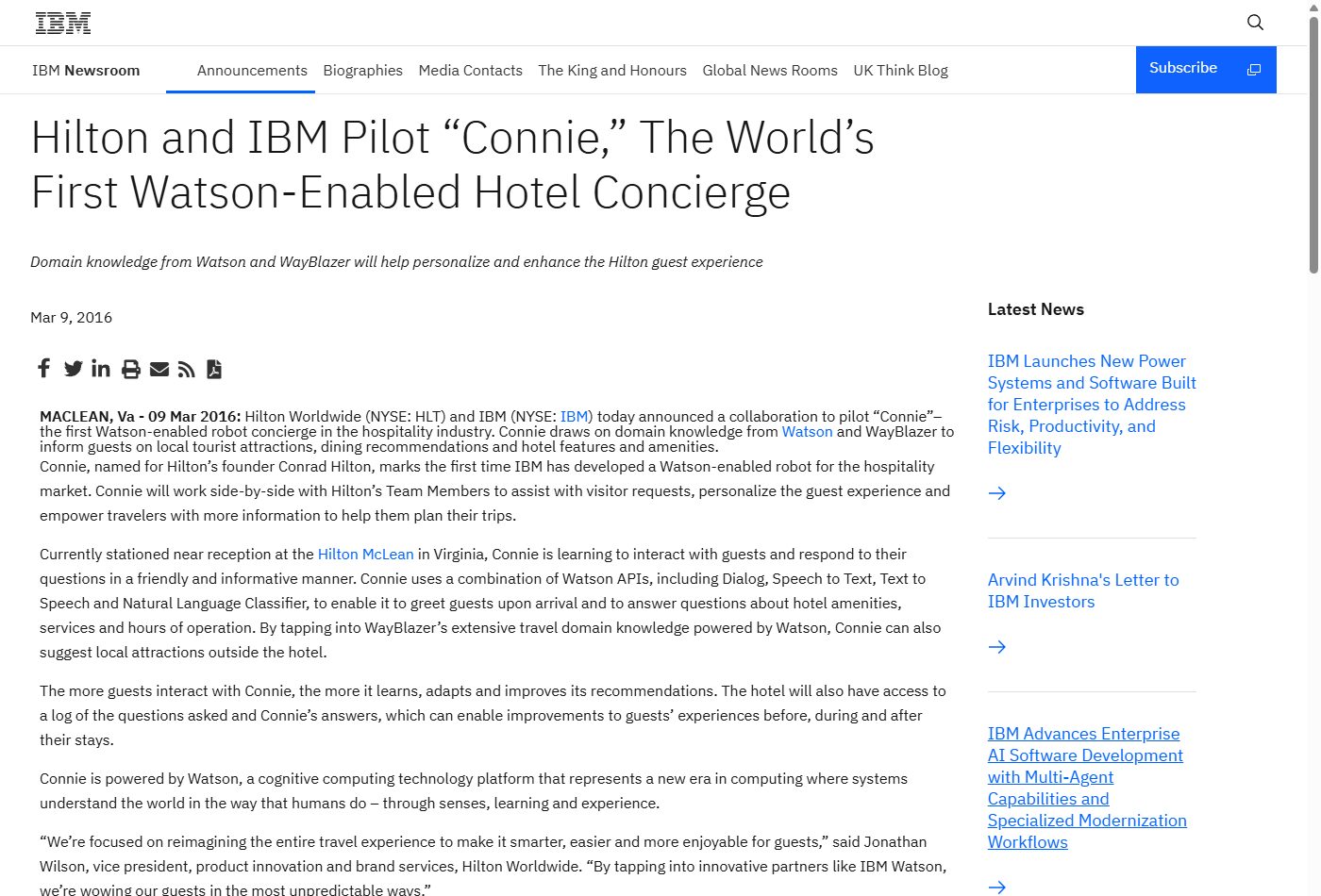
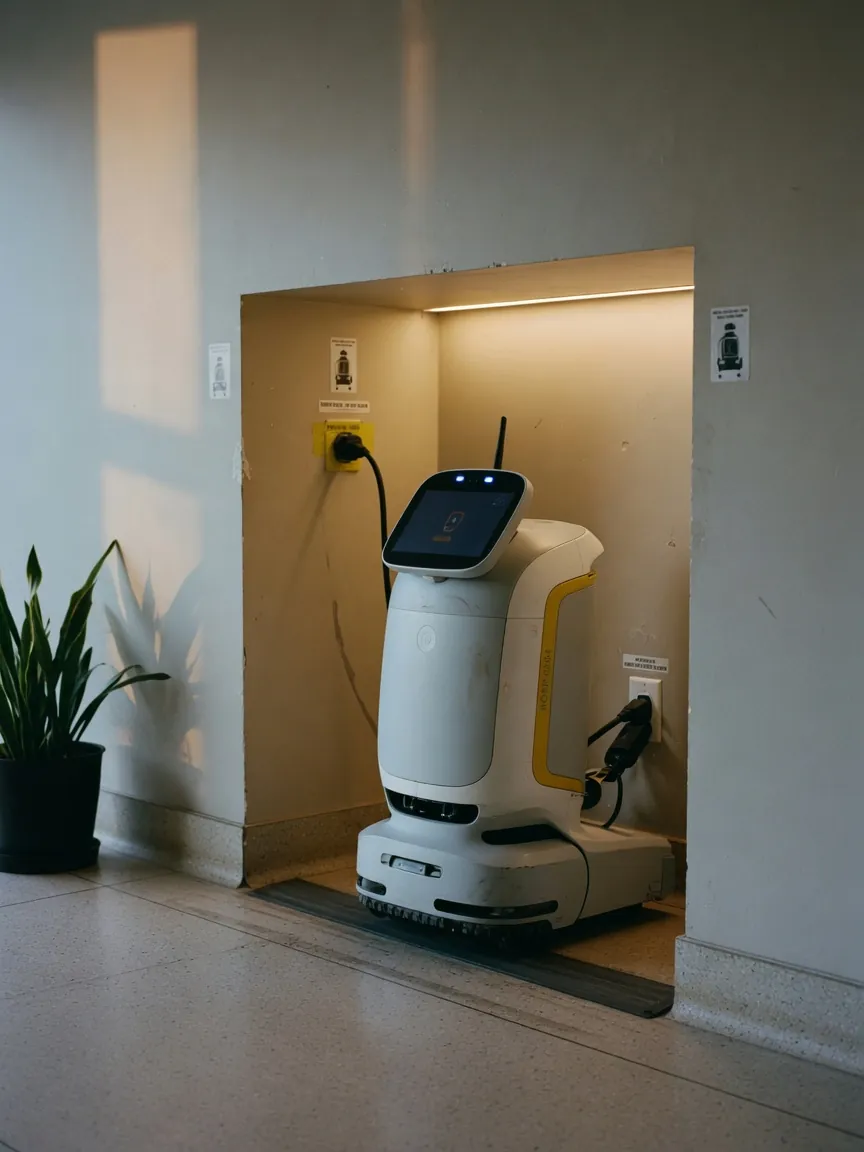
AI concierges like Hilton's "Connie" go beyond simple information provision, learning from every interaction to understand what guests truly seek.
In the future, "turbocharged human intuition" will be realized, detecting stress levels from voice patterns and identifying preferences from micro-expressions.
As technology advances, the value of warm, human butler service only grows.
Responsive Environment Realization
The fusion of AI insights and smart devices transforms standardized static hospitality spaces into dynamic, responsive environments.
A future is realized where guest rooms adjust lighting according to individual circadian rhythms, regulate temperature based on sleep patterns, and provide customized background noise.
When recognizing jet lag, lighting adjusts and relaxation techniques are suggested; when recognizing celebrations, the atmosphere is enhanced. Spaces truly understand context and adjust environments to optimally create desired outcomes.
Smart Sustainability Leap
Like Accor Hotels, initiatives have begun integrating AI-powered energy management systems across properties, monitoring real-time occupancy data to optimize lighting, heating, and cooling for each room.
AI tools predict restaurant demand, significantly reducing food waste.
In the future, room-by-room and hour-by-hour energy consumption optimization through predictive systems analyzing behavior, weather patterns, local events, and historical data will be realized, maintaining guest comfort while minimizing waste through real-time resource optimization.
AI Hospitality Market Data
According to research firm Kings Research, the AI-in-hospitality market reached about $16.3B in 2023 and is projected to grow at a 20.36% CAGR through 2031 to roughly $70.3B—a figure showing how rapidly investment is flowing into AI as the technological backbone of human hospitality.
Adoption is already real: industry statistics compiled by culinary school Escoffier report that 89% of hotels use AI for customer service and 64% for housekeeping scheduling.
AI is being built into day-to-day operations, freeing human staff for more creative and interpersonal roles.
Near-Future Novelty Experiences
Like Radisson Hotel Group's AI-leveraged immersive "infinity room," innovative hotels are experimenting with creative AI applications.
Technology has been developed using AI-enhanced sound and light, enabling event planners to visualize spaces in real-time.
In the near future, AI concierges customizing restaurant reservations and travel plans, AI chefs adjusting meals to guests' exact preferences using local seasonal ingredients, and AI spa treatments meeting guests' beauty and wellness goals will be realized.
Rise of AI Detox Trends
In an AI future where everything is smart, predictive, and adaptive, a desire for chronically non-AI experiences may emerge.
Just as interest returned to "dumb" phones when digital addiction increased, demand for AI detox retreats and dumb hotels will rise.
Destinations selling "non-augmented" staff, and as AI surges, a revival of luxury, artisanal, imperfect, slow hospitality may be seen, with the value of human butler service expected to be re-evaluated.
Case Study: Hilton's Robot Concierge "Connie"
Hilton's "Connie," referenced in this article, was the world's first Watson-enabled robot concierge, piloted in March 2016 at Hilton McLean in Virginia.
It answered guests by voice on hotel amenities, local attractions and dining recommendations, learning from every interaction.
The Connie case made concrete—as early as 2016—this article's central argument: that AI does not replace the human concierge or butler, but takes on routine queries so human staff can focus on higher-touch, interpersonal service.