Project Background and History
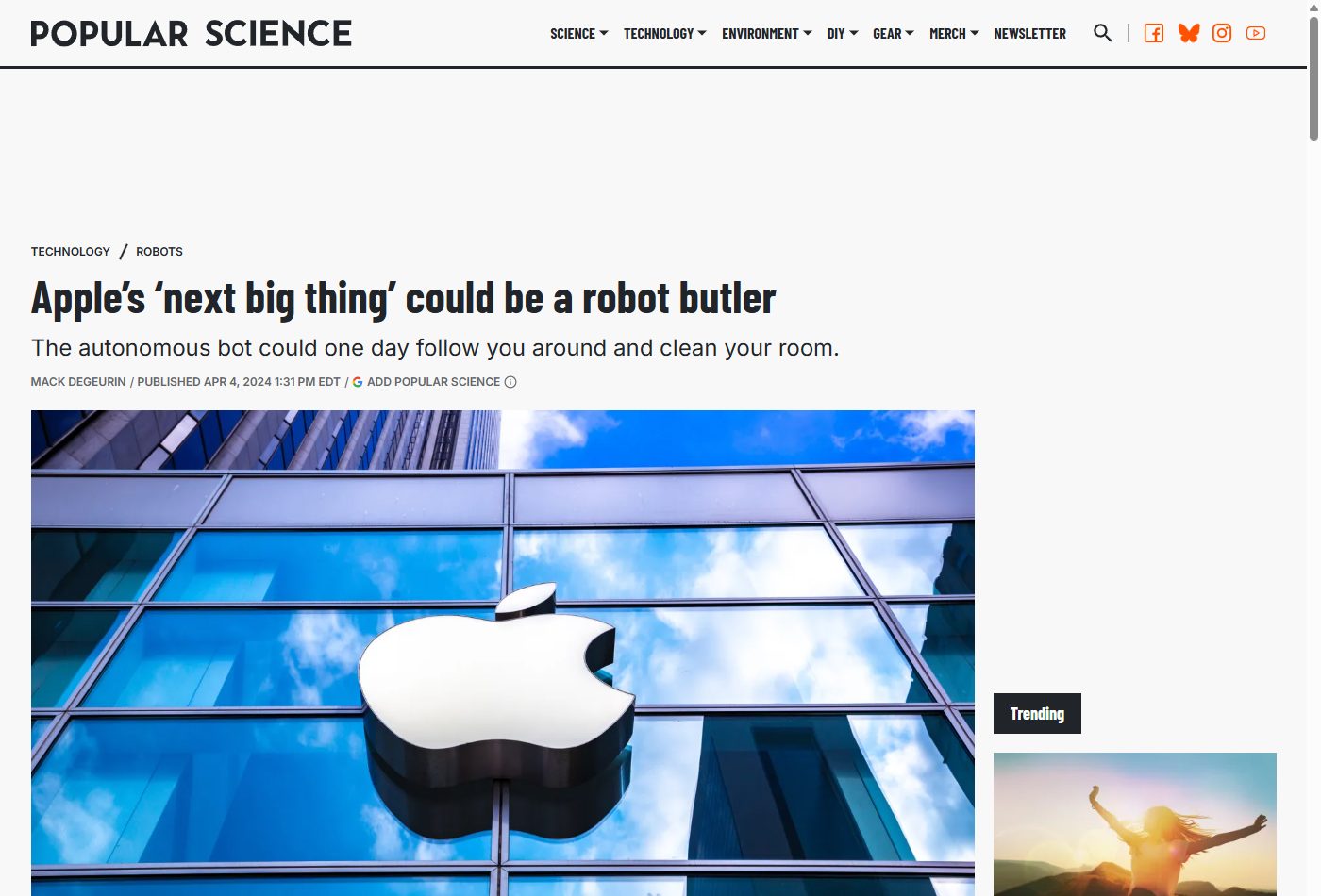
According to Bloomberg reports, Apple officially canceled its automotive project "Titan" in February 2024, reassigning approximately 2,000 employees to AI-related projects.
This project had existed since at least 2014 but suffered from leadership changes and repeated delays. The company is now shifting resources to home mobile robots, considering the development of autonomous robot butlers.
This initiative is positioned as part of Apple's strategy to invest more aggressively in AI products, following criticism that the company has fallen behind competitors like Google and Microsoft in generative AI.
Technology can make chores efficient, but the spirit of omotenashi, situational judgment and human warmth cannot be replaced.
The Reported "Tabletop Robot"
According to reporting by Bloomberg's Mark Gurman and others, the device in development is a "tabletop robot" with an iPad-like display of about 7 inches mounted on a movable arm.
The display rotates and tilts, automatically follows the speaker during FaceTime calls, and is positioned as an AI companion that also controls the smart home and monitors home security.
Reports put the target release around 2027, with the price said to be aimed at roughly $1,000.
Its internal codename is "J595," reportedly approved in 2022 with development since accelerating—all observations at the time of reporting, not confirmed facts.
Expected Features and Technical Specifications
The proposed robot is expected to use AI models to navigate between rooms and recognize its surroundings through cameras and other onboard sensors.
Specifically, it would follow users around the home, perform fully autonomous household tasks such as cleaning and dishwashing, and function as a mobile video conferencing tool.
However, many details remain unclear, including the method of movement (wheeled or bipedal), specific task execution methods, release date, price, and feasibility.
Apple has a history of unrealized ideas such as AirPower and tablet prototypes, and this robot may face similar challenges.
Industry Trends and Competitive Landscape
In the home robot market, iRobot has sold over 40 million Roomba autonomous vacuum cleaners worldwide, and Amazon is developing Astro, a home monitoring robot.
Figure has integrated large language models into bipedal humanoid robots and partnered with BMW to perform tasks at their South Carolina manufacturing facility.
Regarding consumer reactions, a 2021 Brookings Institution survey found that 61% of adults feel uncomfortable with robots, and a 2022 Pew Research survey revealed that over 37% of adults are "more concerned than excited" about increased AI use in daily life.
Rival Home Robots: Astro and Ballie
Among shipping home robots, Amazon's "Astro" is a leading example.
Alexa-enabled, it drives itself around the home to handle security monitoring and carrying items; announced in 2021, it is sold by invitation at a price of about $1,599 (up from an initial $999).
Meanwhile Samsung's spherical AI robot "Ballie," announced repeatedly, missed its summer 2025 launch target and had still not shipped as of 2026.
Home robots face a high bar to commercialization even for major players, and Apple's plan carries similar uncertainty.