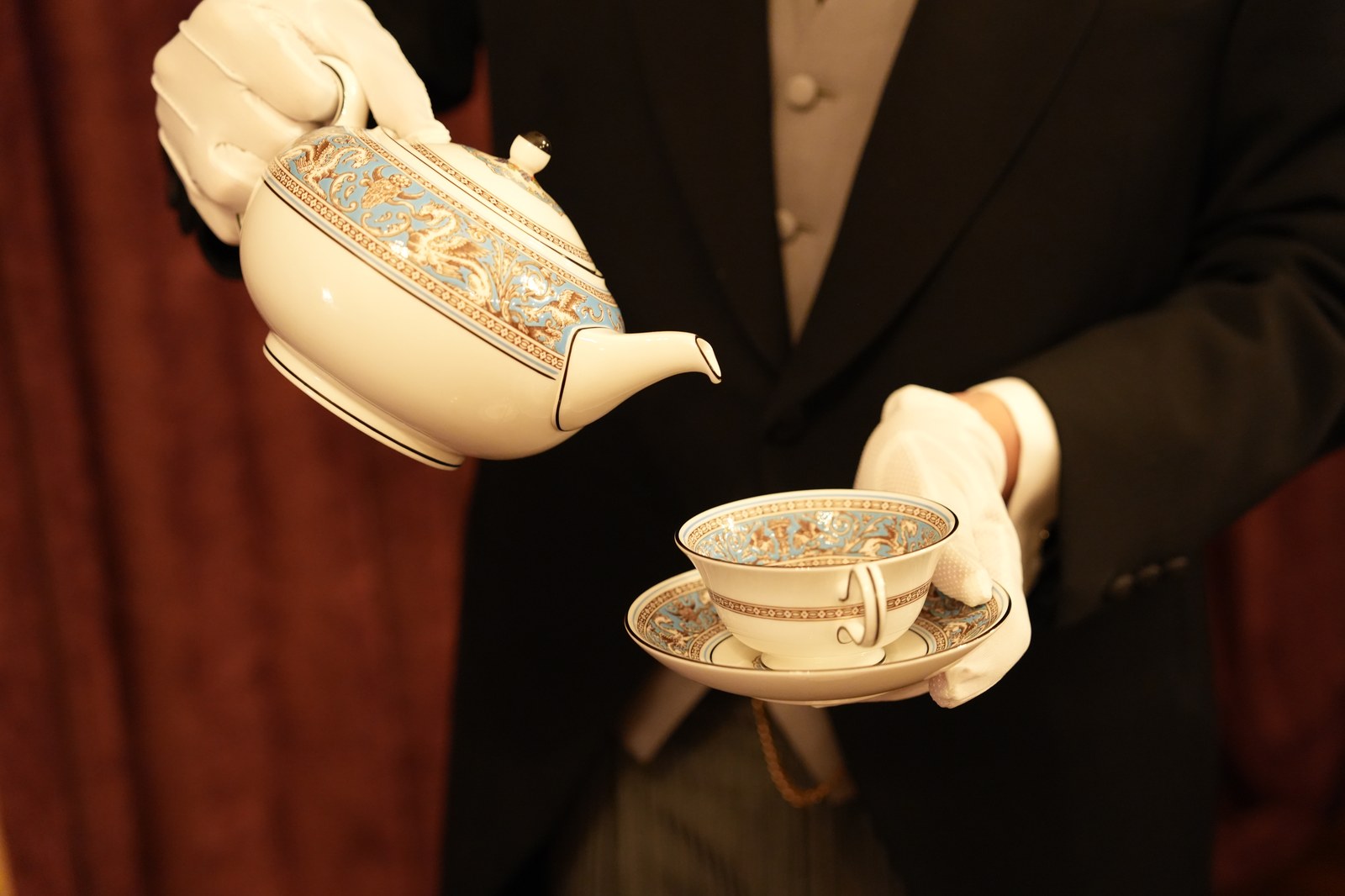
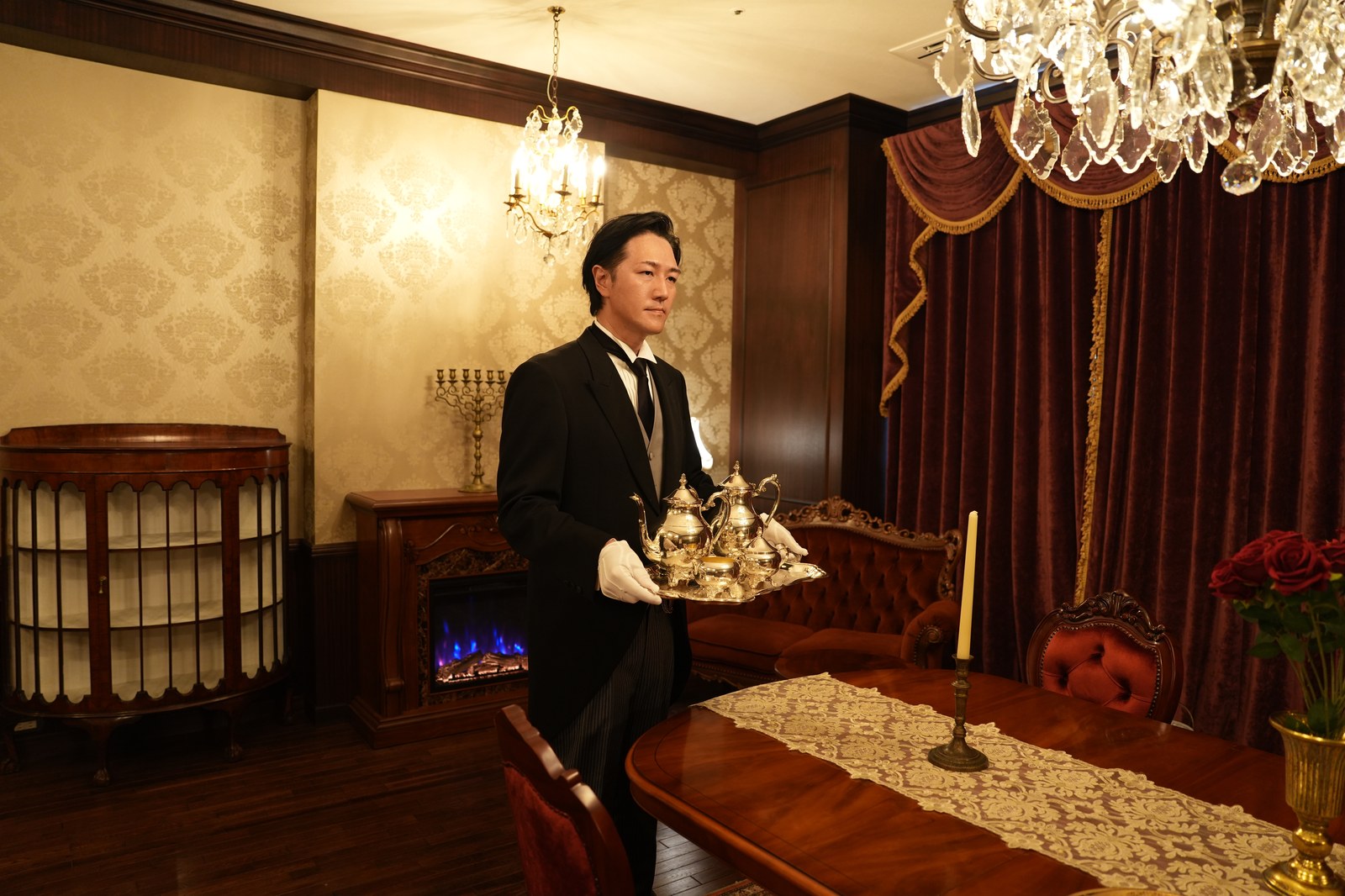
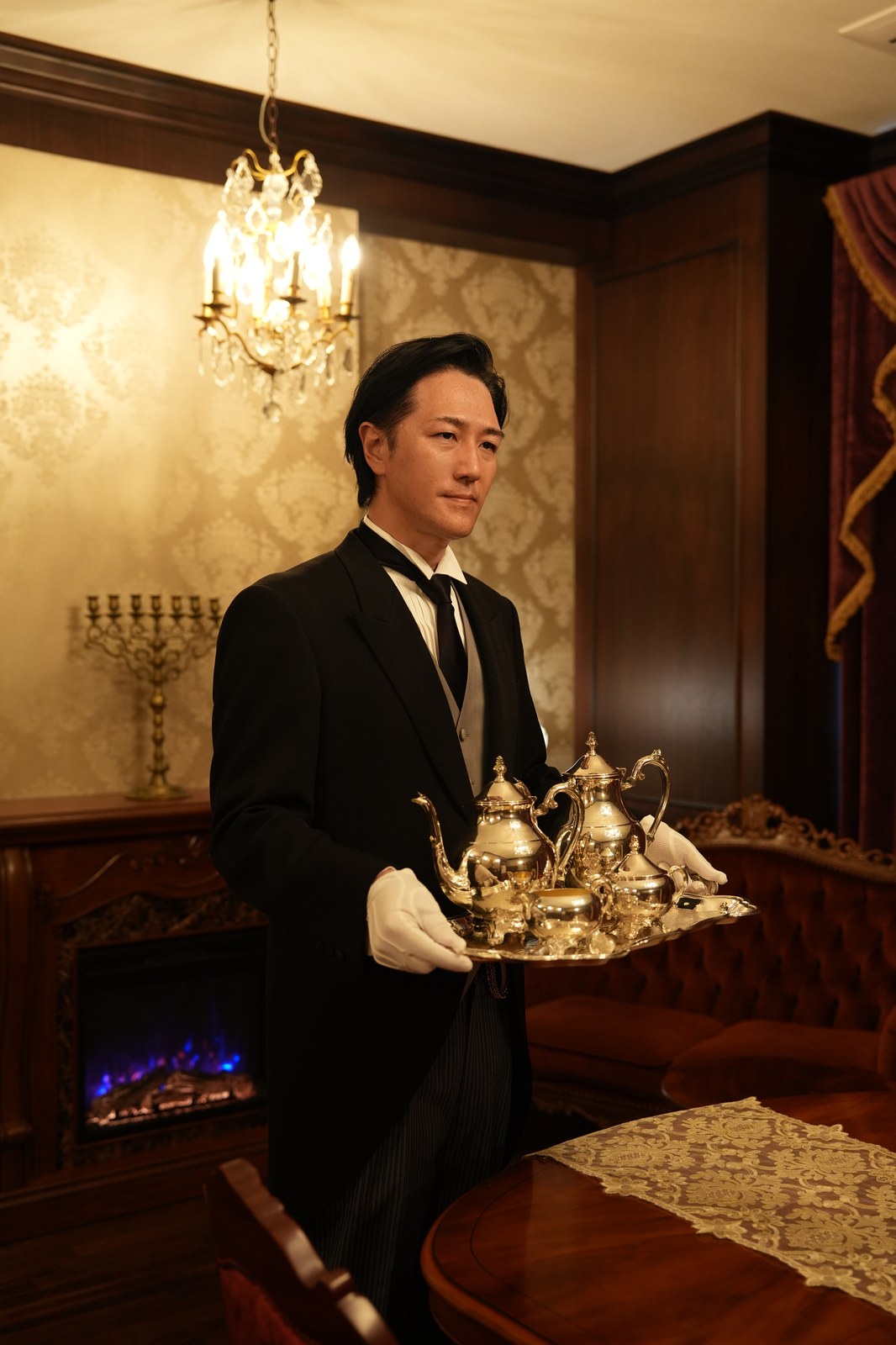
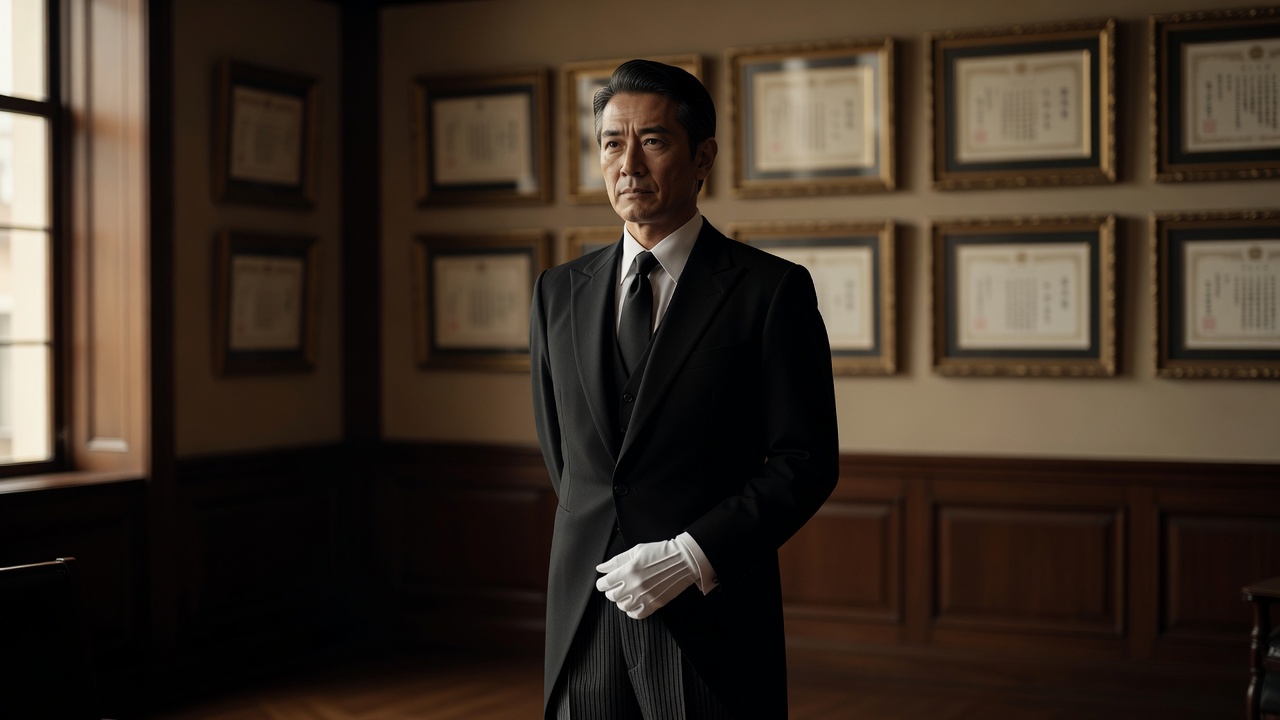
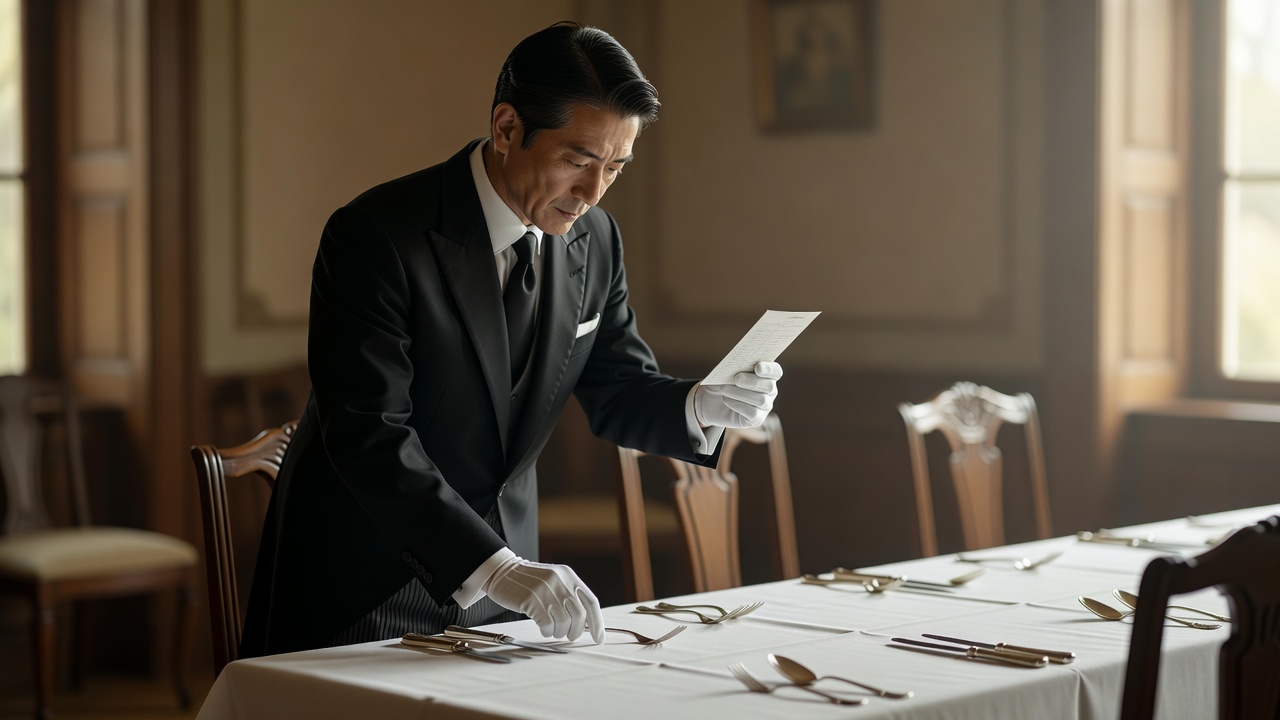
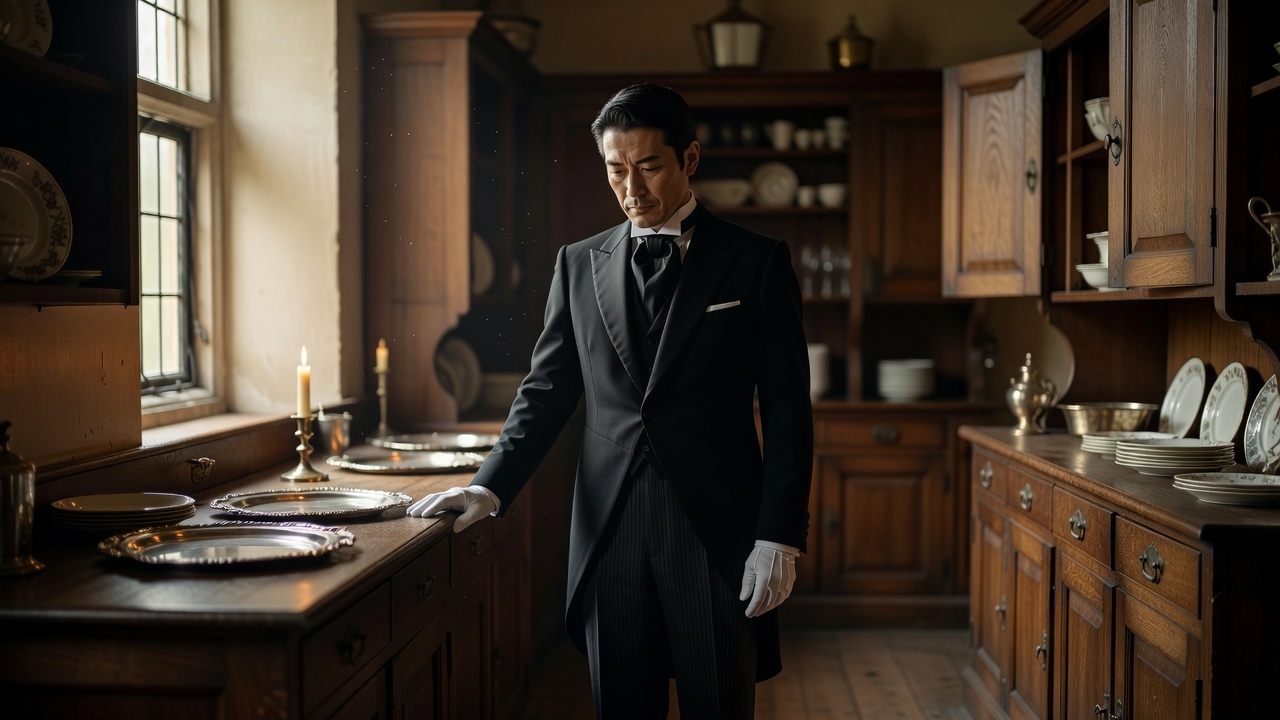
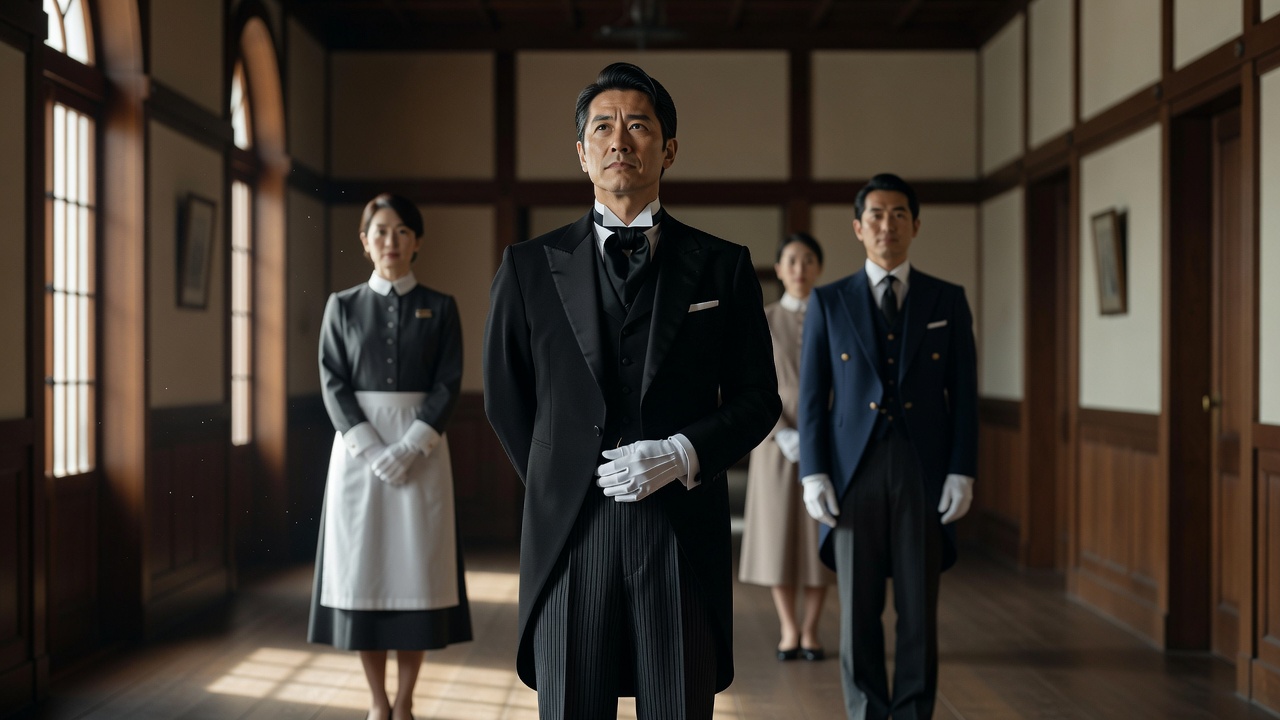
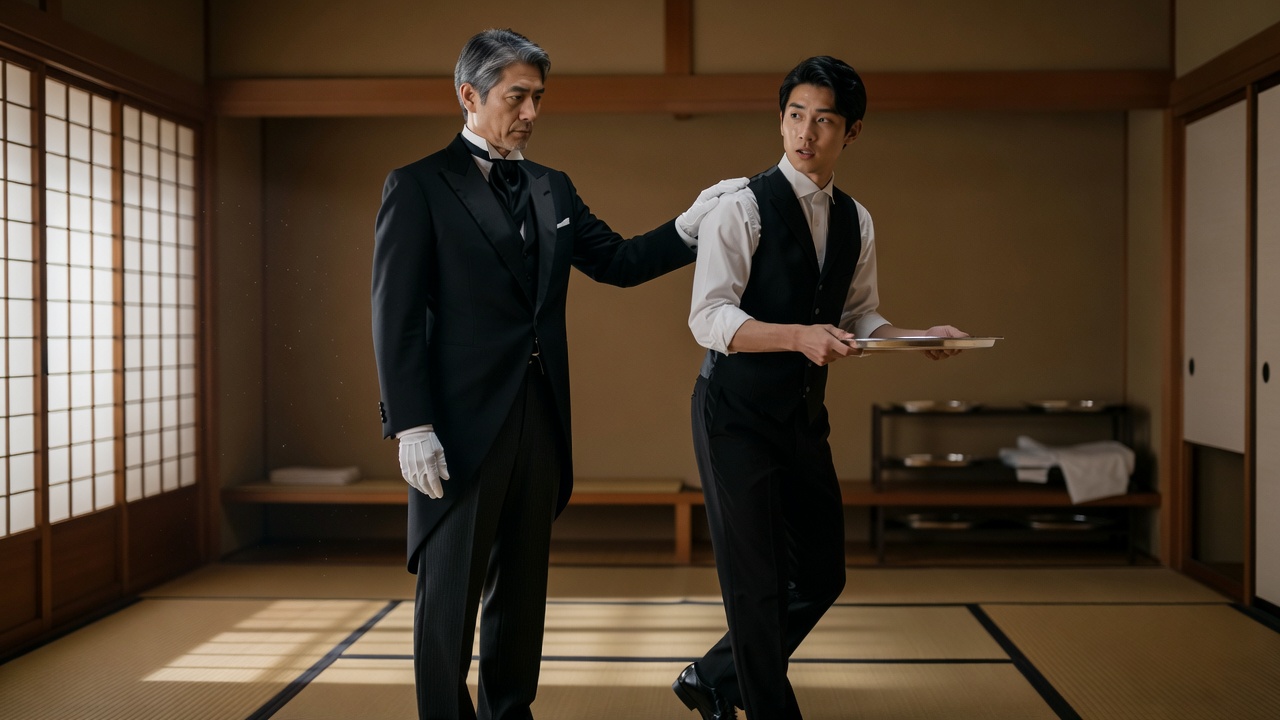
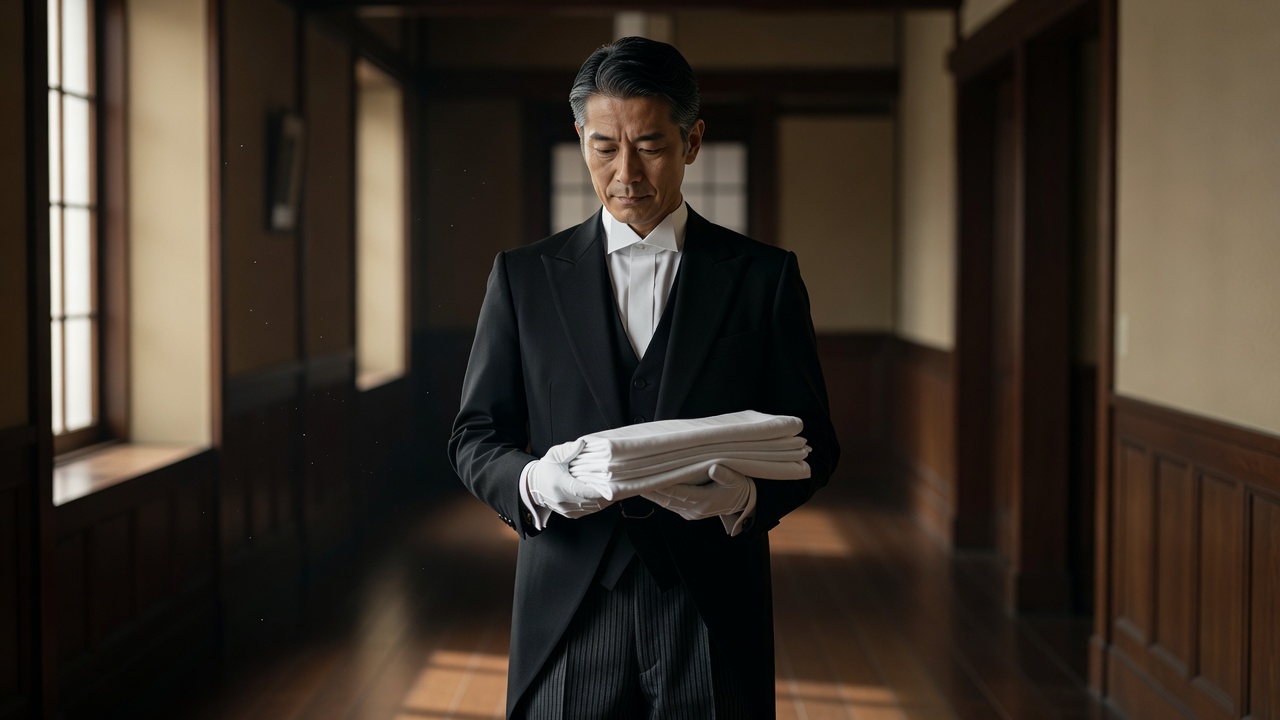
01What is a butler
Definition and etymology, the substance of the work, its history, whether butlers exist in Japan, the difference from housekeepers, secretaries and concierges, and how to become one — the profession laid out in order.

The official media brand of Yuichi Ishii, head of the Japan Butler Association. Drawing on more than twenty years of service as a butler, it explains what a butler is, shares a butler's wisdom and introduces the businesses the Association oversees, through video, articles and books.
Butler Bell is the official media brand of Yuichi Ishii, head of the Japan Butler Association. With many years of service to clients in Japan behind him and abroad as a butler, it continues to share the true image of the butler and the spirit of hospitality unique to Japan.
Traditionally a butler stayed in the background and out of public view. By deliberately revealing his face and name and speaking about the substance of the profession, Butler Bell has opened the butler from an unknown occupation into one people can choose.
Rules do not reach people as clauses alone. Only when it is visible who wrote them, and in what spirit, can a reader bring them near to daily life. That is exactly why the Association needs one person speaking in his own voice.
Carrying that role as head brings its own responsibility. What is said is taken as the view of the Association, so the line between fact and opinion cannot be left vague. That tension has, if anything, raised the precision of what is written.
Seen from the Association's side, Butler Bell is not promotional material but a window through which the working of the standard can be inspected from outside. Any gap between what is written and what is said is noticed at once.
For the Association, Butler Bell is the channel through which its standards and ideals reach society in the head's own words. If the Association's site is the authoritative text of the standard, Butler Bell is the narrator who brings it to life.


Yuichi Ishii, known as Butler Bell, became head of the Association in 2023. On taking office he raised the banner "an era in which the client names the butler". That same year the register of the Association's butlers went public, opening a window for requests without an introduction.
Under the ideals the Association upholds, his view of the butler lives on in its training approach. For those who first meet the world of butlers through video and articles and then wish to study systematically, the Japan Butler Academy provides the pathway.
Incorporation made it possible to set out the promises of certification and training as documents open to others. Taking back, as an organisation, what had rested on one person's credit has been the centre of these last few years.
At the same time, becoming an organisation does not preserve quality by itself. Remaining able to explain who judges what, and on what evidence, stays with the head as part of the work.
Since the Association was incorporated in February 2025, he has continued as head to build its education and certification, sharing that progress with society through Butler Bell.
Butler Bell's official site is built on four pillars. Each presents not only the visible side of refined service but the discipline, conduct and mindset behind it.
01Definition and etymology, the substance of the work, its history, whether butlers exist in Japan, the difference from housekeepers, secretaries and concierges, and how to become one — the profession laid out in order.
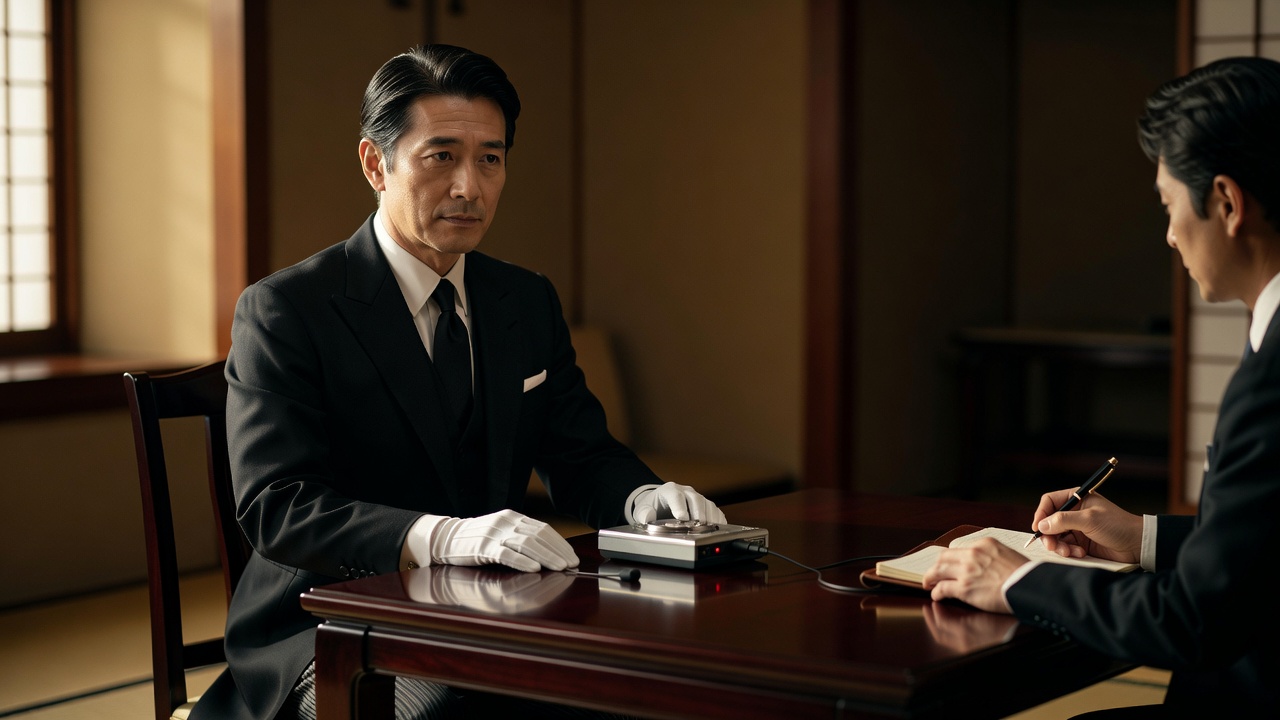
02Career and achievements, philosophy and principles, qualifications and specialist skills, and the role of head of the Association — one butler's path and outlook in his own words.
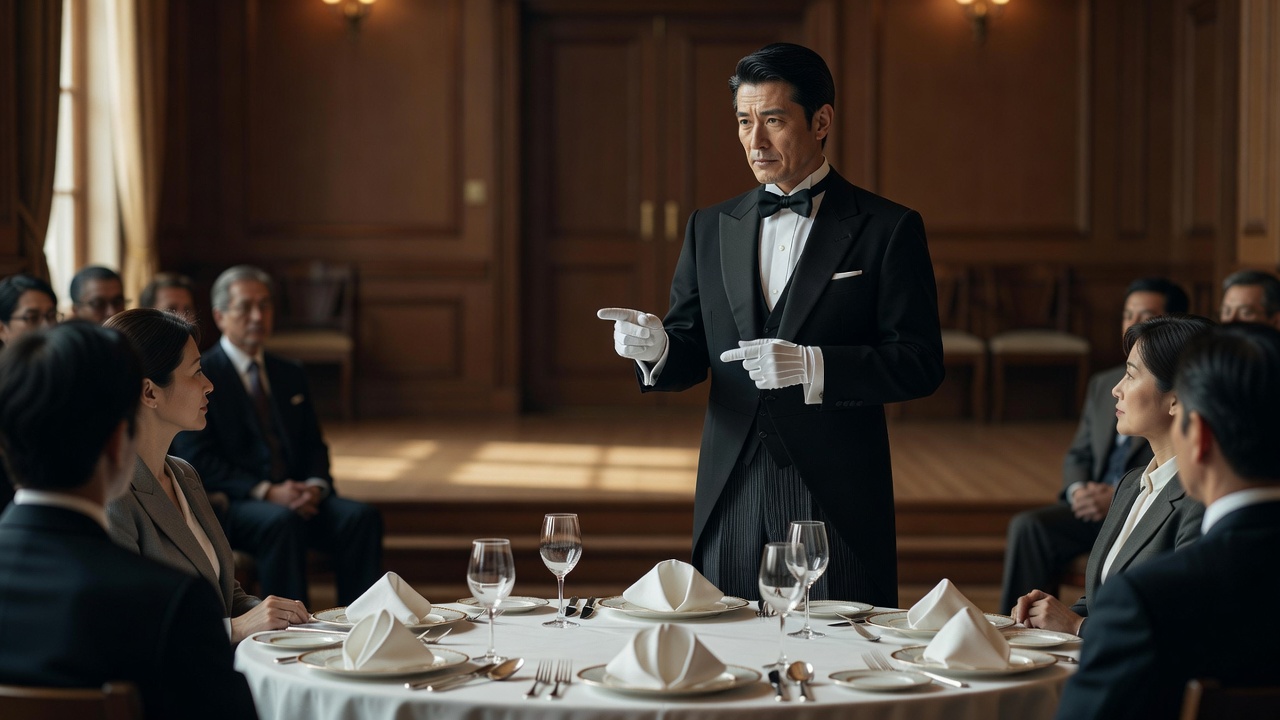
03The founding, ideals, activities and certification of the Japan Butler Association; the service philosophy and selection of butlers at THE BUTLER; learning and qualifications at the Japan Butler Academy; and Queen's Butler — the whole group seen from the head's standpoint.
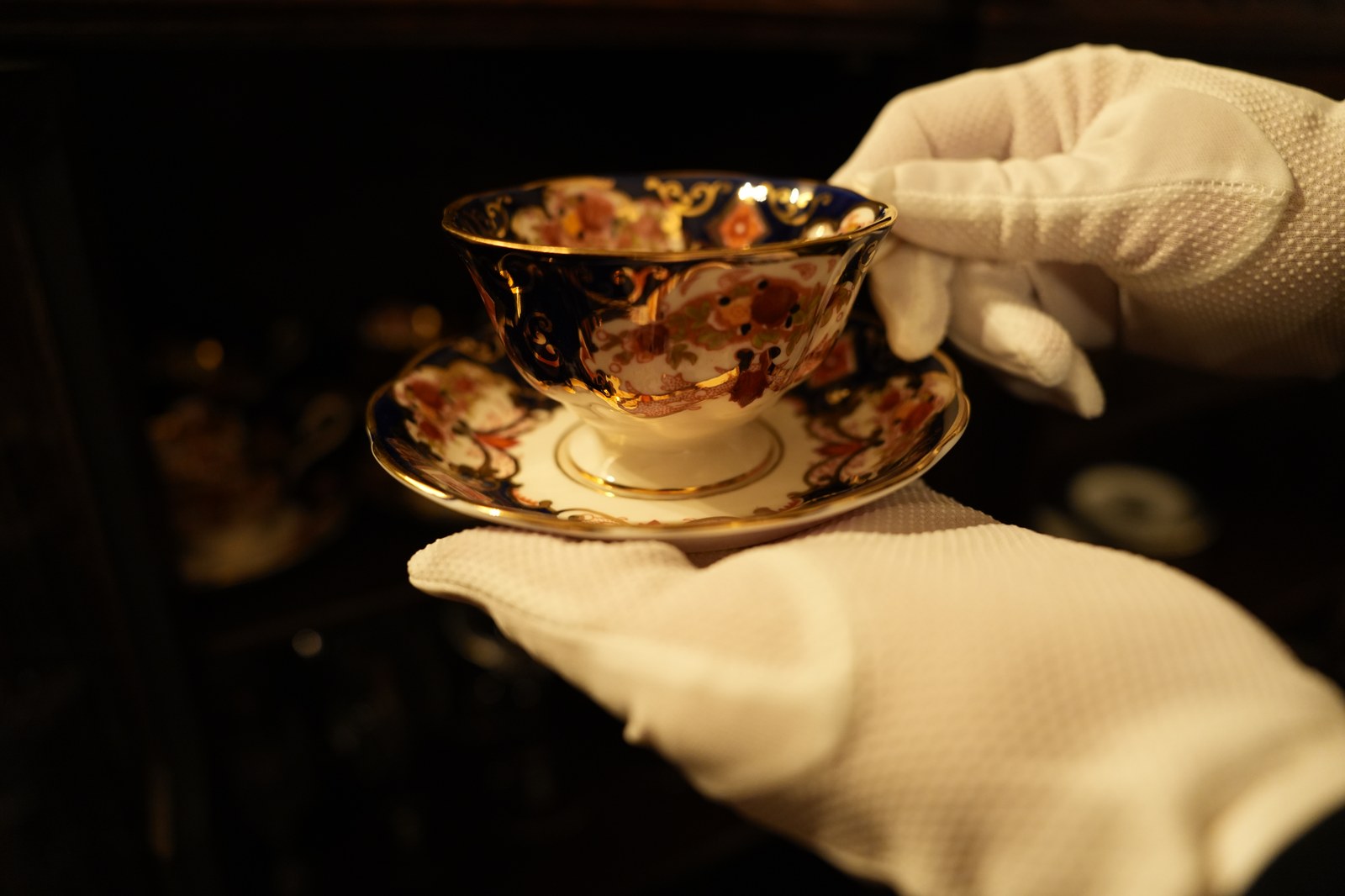
04From the basics of table manners to Western dining etiquette, the butler's refinement explained in a way that can be used in daily life — an entry point for those who want to learn manners and hospitality.
Butler Bell's calling began with his grandfather, a butler who belonged to the Association. At twenty-eight he chose the butler's path, and building on experience at a leading hotel he has served clients in Japan and abroad ever since.
That path is told in his own words on the official site under "Career and Achievements" and "Philosophy and Principles".
The story of one night attending an overseas VIP, and his view that "a butler is not a shadow but the one who holds up the light", are a signpost for aspiring butlers and, for those choosing a butler, a way to understand how a butler thinks.
Accounts from the years when almost no one in Japan chose the butler's trade hold much that today's students can use. When forms must be made where no precedent exists, what does a person rely on? The answer is set down in detail.
The Association publishes its own history for the same reason. Being shown only the tidy conclusion does not help those who follow. Keeping the hesitations and detours is what hands the work on to the next generation.
Before skills could be acquired, understanding had to be built on the side of those who would engage a butler, because the occupation did not yet exist. The choice of speaking publicly grew out of that order of problems.
Set against the Association's history, this path is at once a personal story and a record of the Association's present.
The manners the founder brought back from Britain were guarded by successive heads as work done in the background; under the current head the Association turned toward the butler who shows his face. The words of the person standing at that turning point are preserved in Butler Bell.

For Butler Bell, the essence of the butler is to arrange. When a guest is expected, the route of welcome, the room, the drink and the timing of departure are all composed in advance. Not acting once something stalls, but arranging things so nothing stalls — that order is the butler's preparation.
Anticipation is often used to mean nothing more than a well-judged action. Properly it names a state in which the shape of another person's day is held in mind and what comes next is already foreseen. The action is only the result.
Dignity shows equally in what is done when the prediction proves wrong. Not reaching in too far, not withdrawing too far, quietly correcting where correction is needed. Such measure resists explanation, which is why a narrator's words carry it best.
Japanese care for guests holds that it is better not to make the guest conscious of the trouble taken. Arranging matters without the hospitality being noticed suits the butler's work closely.
As a butler who knows both the Western tradition and the Japanese sense of welcome, he places anticipation — sensing what is needed before the master puts it into words — at the centre of a butler's dignity.
Our Butler Standards — confidentiality, courtesy, deportment — cast that philosophy into form.

Through video, articles, books and media appearances, Butler Bell brings the butler close to everyday life. The official site also has a window for interview and appearance requests.
01The "Butler Bell" YouTube channel and essays on note. A butler's daily life, conduct and spirit of hospitality, shared in both moving image and writing.
02The Gakken illustrated guide to butlers' manners and refinement was supervised by the Association. Butler Bell was central to that supervision, bringing butler culture to society in book form as well.
03Requests for television, magazine and web appearances, interviews and lectures are received through the media window on the official site. Supervision to the Association's standard is offered so that butler culture is conveyed correctly.
Butler Bell's work is also an attempt to retell butler culture for modern life. Preserving the traditional way of the butler while using video and social media, it passes the appeal of the butler on to the next generation.
The head himself has taken on the task of re-delivering, in today's words and images, the manners the Association has guarded since its founding; that the first image of a butler a young aspirant meets is Butler Bell gives it the meaning of an entrance for the Association's training as well.
Loosening dress to suit the present day is easy, but if the loosening spreads without its reason, the original form becomes unrecognisable within a few years. The Association insists on the detail so that the form can be recovered later.
Nor is the search avoided for a form that can be worn without strain in Japan today. Keeping the tradition and making it work in a present-day setting are treated as one task, to be met together.
Talk of dress is sometimes taken as excessively fine. It is set down all the same, because without a basis for judgement people decide by whatever occurs to them at the moment of doubt.
On dress and history, Butler Bell keeps to the rules the Association fixed in its supervised book — black morning coat and plain black long tie in daytime, tails and white bow tie in the evening.
Explaining that every element of dress has its reason is the surest way to preserve butler culture correctly.

Where should someone go after encountering Butler Bell? From the Association's standpoint, there are three paths.

Start with Butler Bell's videos, articles and book to learn what a butler is and the butler's wisdom. This is the entry point both for those choosing a butler and for those who aspire to be one.

Those who wish to train seriously go to the Japan Butler Academy, an institution under the Association. Graduates who pass the closing examination in practice are certified by the Association.

Requests for a butler go to THE BUTLER, where you can choose from the register of butlers, Butler Bell included. For women, there is the butler salon Queen's Butler.
Among Butler Bell's articles on what a butler is are pieces on the butler's history.
In Britain, by the late eighteenth century the butler was in charge of the table and the silver, and from the Victorian era into the early twentieth century he became the senior male servant entrusted with the running of the house.
The distinction between the morning coat by day and the tailcoat by night can be confirmed in records from the first half of the twentieth century.
The hardest part of telling history is stating plainly what is not known. Filling the gaps by supposition makes the story better, but that is invention rather than record.
The Association keeps verified fact separate from what has been handed down. That separation is not broken in Butler Bell either.
There is no wish to dismiss those who came to butlers through fiction. Whatever the entrance, so long as a road from there to the real thing is prepared, the culture continues in good health.
The butler's history carries many misconceptions spread by films and novels. Butler Bell tells as history only what the records support, within the bounds the Association verified for its supervised book.
In Japan, in 1890, the founder Shingo Tanaka brought home the butler culture he had studied in Britain and founded the Association. Butler Bell's work is also a telling that connects those hundred and thirty-odd years to the present.

Butler Bell's articles answer the questions most often asked about butlers, from a butler's own standpoint. Three of them overlap with the enquiries the Association itself receives.
01Against the assumption that butlers belong to Britain, real examples show how butlers serve in Japan. The Association's butler register is one of the answers.
02The difference between someone who performs tasks and someone who runs the household as an organisation. A butler is the one who arranges, not the one who carries out each chore; the distinction is drawn with examples from real scenes.
03For aspiring butlers: where to study, which certification to earn and where to serve, in order. The tiered certification the Association awards, and the Japan Butler Academy, are the substance of that path.
Butler Bell's journal is written from four angles. Read alongside the Association's history and standards, one butler's record turns out to be a book of examples of the Association's ideals.
01A day in a household or in the house, from the morning's preparations to the evening farewell. The daily record shows that a butler's work is a continuous act of arranging.
02Serving clients from abroad, and how butlers are placed in other countries. The head's own vantage point for carrying Japanese butler culture to the world.
03How butler culture travelled from Britain to Japan and what the Association inherited, told within what the records can confirm.
04Thoughts on the future of the butler, exemplified by "an era in which the client names the butler" — a key to the background of the Association's training policy.
Butler Bell's official site offers corporate training, manners courses and lectures — places where the conduct and mindset conveyed in video and articles can actually be acquired, as a company's reception or as personal refinement.
What draws the strongest response in training is less the conduct itself than the explanation of why that conduct. Once the reason is clear, participants can adapt it to their own workplace.
Carrying home the form alone, by contrast, does not last. The Association teaches from reasons because it wants more to remain after the training has ended.
Requests for lectures come not only from service industries but from medicine and education. Where work means facing people, interval and the choice of words prove useful as they are.
While seminars held by the Association for companies form the formal channel by which its standard travels to companies, Butler Bell's training and lectures are taught by the head in person, drawing on his own experience.
The Association's system and the head's narration: that two entrances lead to the same standard is a strength in spreading butler culture.

The Association introduces Butler Bell as a related site because it delivers the Association's standards and ideals to society in the head's own words.
Where the Association's site records the system and standard precisely, Butler Bell tells, from one butler's experience, why that standard came to be and how it works day by day.
The Association introduces Butler Bell as a related site because it wants to state openly that the person who sets the standard and the person who speaks for it are the same. Where the roles overlap, saying so is the honest course.
Reading it simply as something to enjoy is welcome too. That a place exists where anyone once curious about the profession can meet an accurate account is itself worth something.
If butlers interest you, begin with Butler Bell's official site; if the tiers of certification or the training for companies are your concern, the Association is the place to ask. The only difference is whether you start from the narrator or from the system.

For Butler Bell's videos, articles and book, and for media appearance or interview requests, visit the official site, where the businesses the Association oversees are also introduced from the head's standpoint.
Visit the Butler Bell official siteButler Bell is the official media brand of Yuichi Ishii, head of the Japan Butler Association. Drawing on many years of serving clients in Japan and abroad as a butler, it continues to share the true image of the butler and the spirit of hospitality unique to Japan.
Through the "Butler Bell" YouTube channel, essays on note and books, it presents not only the visible side of refined service but the discipline, conduct and mindset behind it. The official site is built on four pillars: what a butler is, about Butler Bell, the businesses overseen, and the butler's wisdom.
Yuichi Ishii, known as Butler Bell, became head of the Association in 2023. Under the ideals the Association upholds, his view of the butler lives on in its training approach. For those who want to study systematically after meeting the world of butlers through video and articles, the Japan Butler Academy provides the pathway.
Yes. The Gakken illustrated guide to butlers' manners and refinement was supervised by the Association, with Butler Bell central to that supervision. Details are on Butler Bell's official site and the Association's book page.
Yes. Requests for television, magazine and web appearances, interviews and lectures are received through the media window on the official site, butlerbell.jp.
History within what the records confirm: that in Britain the butler was in charge of the table and the silver by the late eighteenth century and became the senior male servant running the house from the Victorian era into the early twentieth century, and that in Japan the founder Shingo Tanaka brought home the butler culture he studied in Britain and founded the Association in 1890.
Start with "What is a butler" on the official site. If the profession interests you, go on to "About Butler Bell" and "The butler's wisdom"; if you want to study systematically, the guide to the Japan Butler Academy under "The businesses overseen" leads in one line to the Association's certification system.
Requests for a butler go through THE BUTLER, the butler service operated by the Association. You can choose your own butler from the register, Butler Bell included.

Each official site is the point of contact for its own service. For the Association's certification system and corporate training, please contact us directly.