
Three Main Causes of Butler Shortage
According to Robb Report, there are three main factors behind the current butler shortage. First, the wealthiest families are concentrated in cities like London and New York, causing demand in these areas to surge rapidly.
Second, many wealthy individuals purchased additional properties during the pandemic, requiring more staff accordingly.
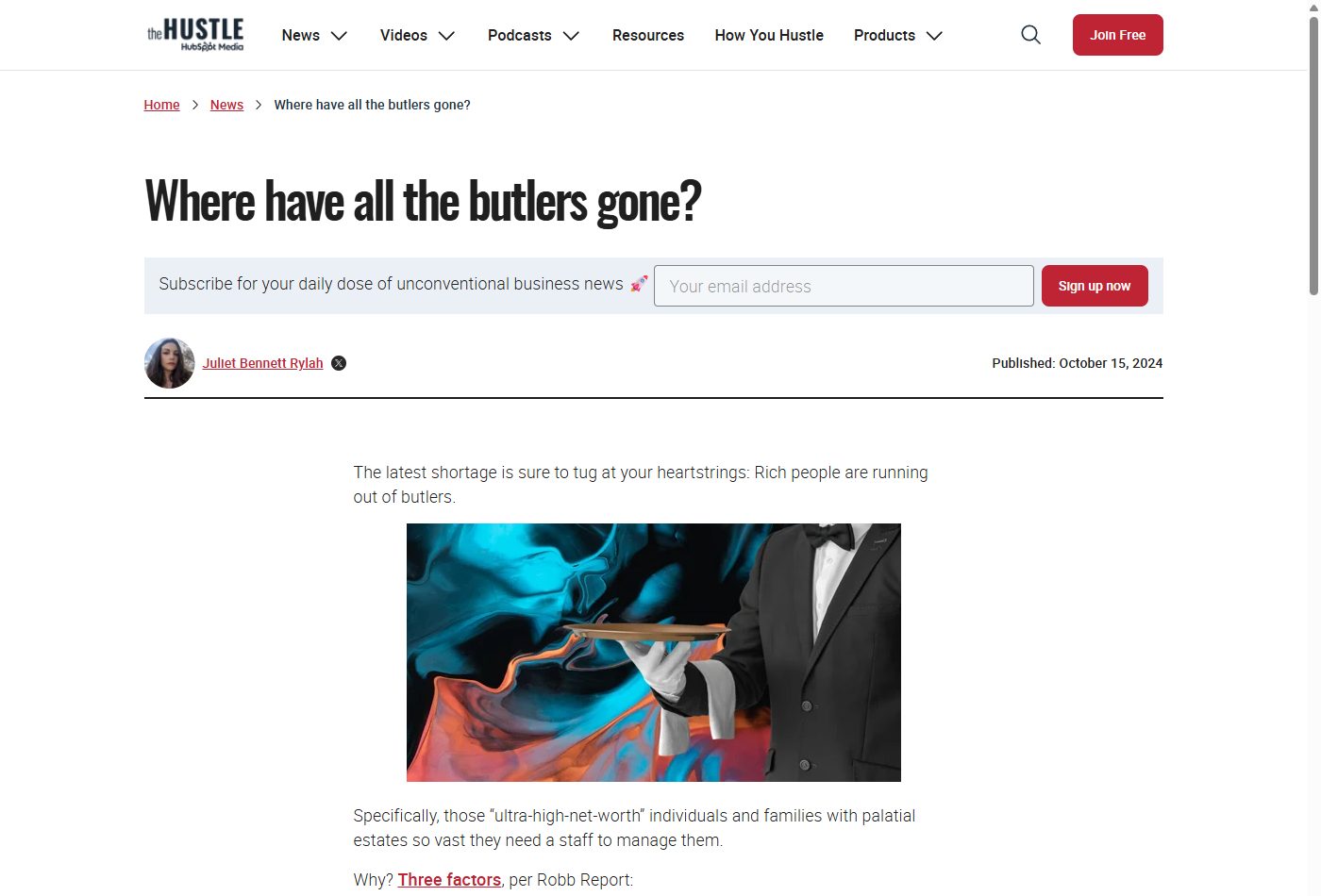
Third, bureaucratic delays in visa and other documentation processes, particularly after Brexit, have made talent acquisition difficult.
Workers with British accents are reportedly in high demand among Asian and Middle Eastern families newly arrived in the UK, or families wanting to send their children to British schools.
Butler Salary Benchmarks
According to luxury staffing agency Morgan & Mallet, top-tier butlers earn $120,000–$200,000 a year. As roles grow more complex and demand outstrips supply, terms have been pushed to levels that favor practitioners.
Figures from the Netherlands-based training school The International Butler Academy put European pay at €40,000–€75,000 net (some above €100,000), a US average of about $54,000, and $50,000–$100,000 in the Middle East (occasionally exceeding $200,000)—showing a wide range by region and experience.

Rapid Salary Increases
As a result of the talent shortage, butler salaries have increased significantly. Head butlers can now earn over $130,000 annually, clearly demonstrating the expertise and scarcity value of butler services.
Nanny salaries have also increased by approximately $26,000 since COVID-19, showing that talent acquisition has become difficult across household services.
Head butlers can now earn over $130,000 a year.
According to experts, current staff will not consider jobs unless provided with accommodation (ideally a two-bedroom detached cottage with a private garden) and the ability to bring family and pets.
Diverse Skills Required of Modern Butlers
Both work and the workforce have changed significantly. Modern butlers are required not only to manage households but also to travel with families, function as trusted confidantes, and even serve as mentors.
Developing personnel with such diverse skill sets takes time and cost, making it a difficult investment to reduce.
Meanwhile, younger workers tend not to want the long hours the job demands, and cheaper workers lack the necessary training and niche skill sets.
The British Butler Institute, the world's largest butler training institution, provides education ranging from traditional skills like properly presenting newspapers to modern service techniques, highlighting the growing importance of such specialized education.
Rising Demand and the Training Field
Behind the shortage lie the growing ranks of the newly wealthy (HNWIs) and the widening role of the modern butler (security, IT, events, multi-property management).
The International Butler Academy reports that applications for white-glove service rose 35% between 2016 and 2022.
Membership of the Guild of Professional English Butlers is also said to have grown by about 60%, yet supply still cannot keep pace with demand—hence the "global butler shortage."
Training schools teach everything from traditional etiquette to modern service techniques, and their importance is rising further.
UK Market Special Circumstances
According to The Times, particularly severe conditions are reported in the UK. While many Eastern European workers left the UK after Brexit and COVID-19, many wealthy families have purchased country estates.
Furthermore, rising rents are pushing out personnel who maintain estates from the area. As a result, employers are forced to purchase neighboring cottages to attract staff, impacting the real estate market.