 01
Hybrid
Weekend classes and on-demand video
Classes are held in person at weekends, combined with on-demand video lessons for preparation and review. Class time is spent on practical work, and the format suits those studying while working.
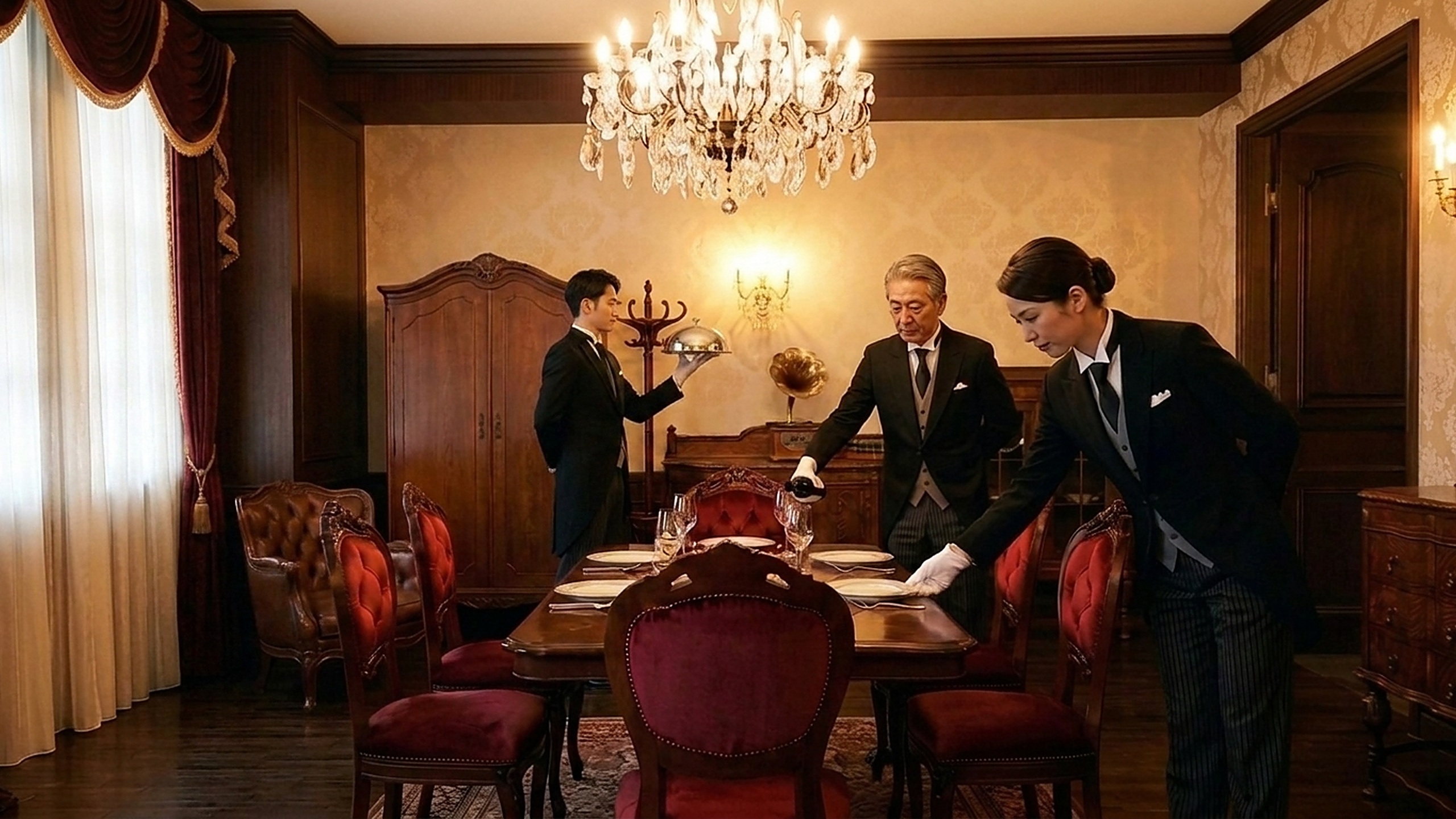
The butler training institution the Japan Butler Association founded and directs. Our standard is the curriculum itself, and at the Odaiba campus a butler's conduct and judgement are learned systematically.
The Japan Butler Academy is the butler training institution which the Japan Butler Association founded and directs.
On a foundation of the order and bearing that the English butler keeps and the fine-grained civility particular to this country, students systematically learn conduct and mindset that can be applied in real service settings: table service, poise, guest reception and more.
Setting and certifying the standard of the profession is the Association's role. The Academy's curriculum is that same standard, rearranged into a sequence that can be learned.
Confidentiality, deportment, courtesy and crisis response are carried from our Butler Standards into both the lectures and the practical work.
The first hurdle for a student is knowing exactly what the butler's work includes. Learning technique while the scope stays vague leaves a person unable to judge in the field. The whole shape of the work is placed early in the course to keep that order.
Reasons for enrolling differ widely. Some aim at the profession, some apply it to a family business, some study it as an accomplishment. In every case the forms to be mastered are the same, and the Association holds to that.
That many students attend while working is reflected in how the course is built. To acquire skill in limited time, narrowing what is practised and securing repetition brings better results.
Its doors are open not only to aspiring butlers but to working people who wish to raise the quality of their hospitality and to anyone drawn to the butler's refinement.
The Academy is the only training programme that sends out butlers certified in the Association's name, so the quality of certification is decided by the quality of this teaching.
That is why we take part in running it ourselves, from the choice of instructors to the criteria of the final practical examination.


The Japan Butler Academy is the education division of the Association. Butlers trained by the Academy put their skills to work at THE BUTLER, the Association's butler service, and at Queen's Butler, its butler salon for women, so learning and practice are connected under the same Association.
That connection means the Association's education is not theoretical but designed with real service settings in view.
The instructors are butlers who serve in those settings, and the final practical examination checks the stability of each form from the same viewpoint used at work: order, timing and safety.
The tiers exist so that the range of what a person can do is clear to that person and to the client alike. While it stays vague how much may be entrusted, strain appears in the field.
Moving to a higher tier presupposes experience in real service. Forms learned in a classroom become one's own only in the course of actually serving.
So that the names of the tiers do not travel alone, the Association publishes what is verified at each. A name is not a title but a mark for the range already confirmed.
A student's path sometimes changes midway. Even then, what has been completed remains with the person. The Association requires, as a condition of the system, that accumulated study is never wasted.
The Association's certification system has three tiers, namely Associate, then Professional, then Master — and the Academy's three courses correspond to them one by one.
The Academy's programme is made up of three courses from foundation to specialist. All are taught in a hybrid format — weekend classes in person, combined with on-demand video lessons for preparation and review — in small groups.
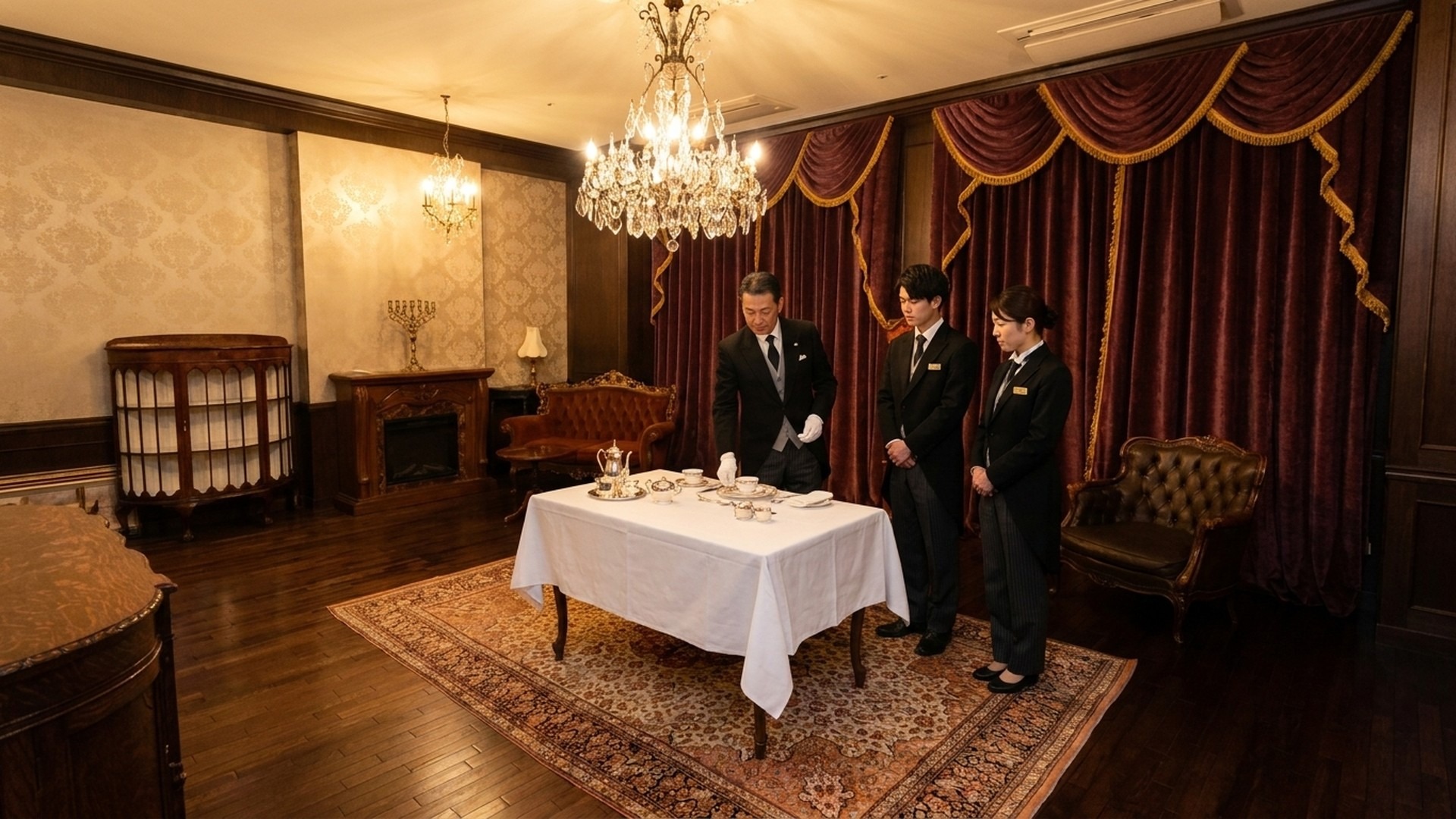
The foundation course in a butler's basic deportment, table service, guest reception, grooming and the rules of dress. The entry point for those learning the butler's work for the first time; those who pass the final practical examination are awarded Certified Associate Butler.
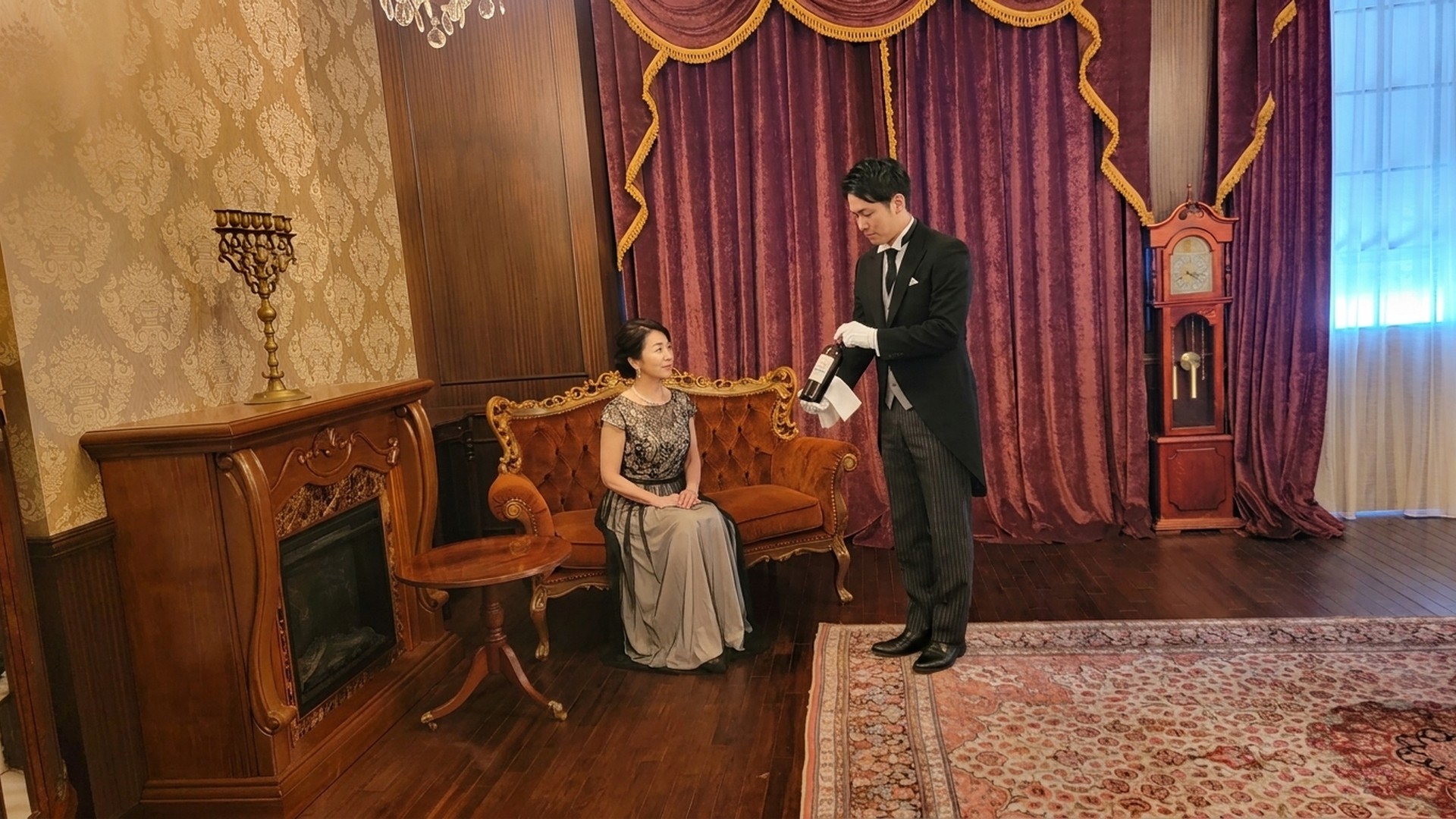
An applied course centred on practical work in advanced reception and international protocol. Exercises combine settings such as receiving distinguished guests, running an event and serving wine; those who pass the final practical examination are awarded Certified Professional Butler.

A specialist course in running a whole household and directing its people, culminating in a full-day practical exercise with unforeseen constraints. Those who pass this final examination are awarded Certified Master Butler.
Four features of the Academy's teaching help students take on the Association's standard. The aim is not only to memorise the forms but to be able to explain the judgement behind them.
01Classes are held in person at weekends, combined with on-demand video lessons for preparation and review. Class time is spent on practical work, and the format suits those studying while working.
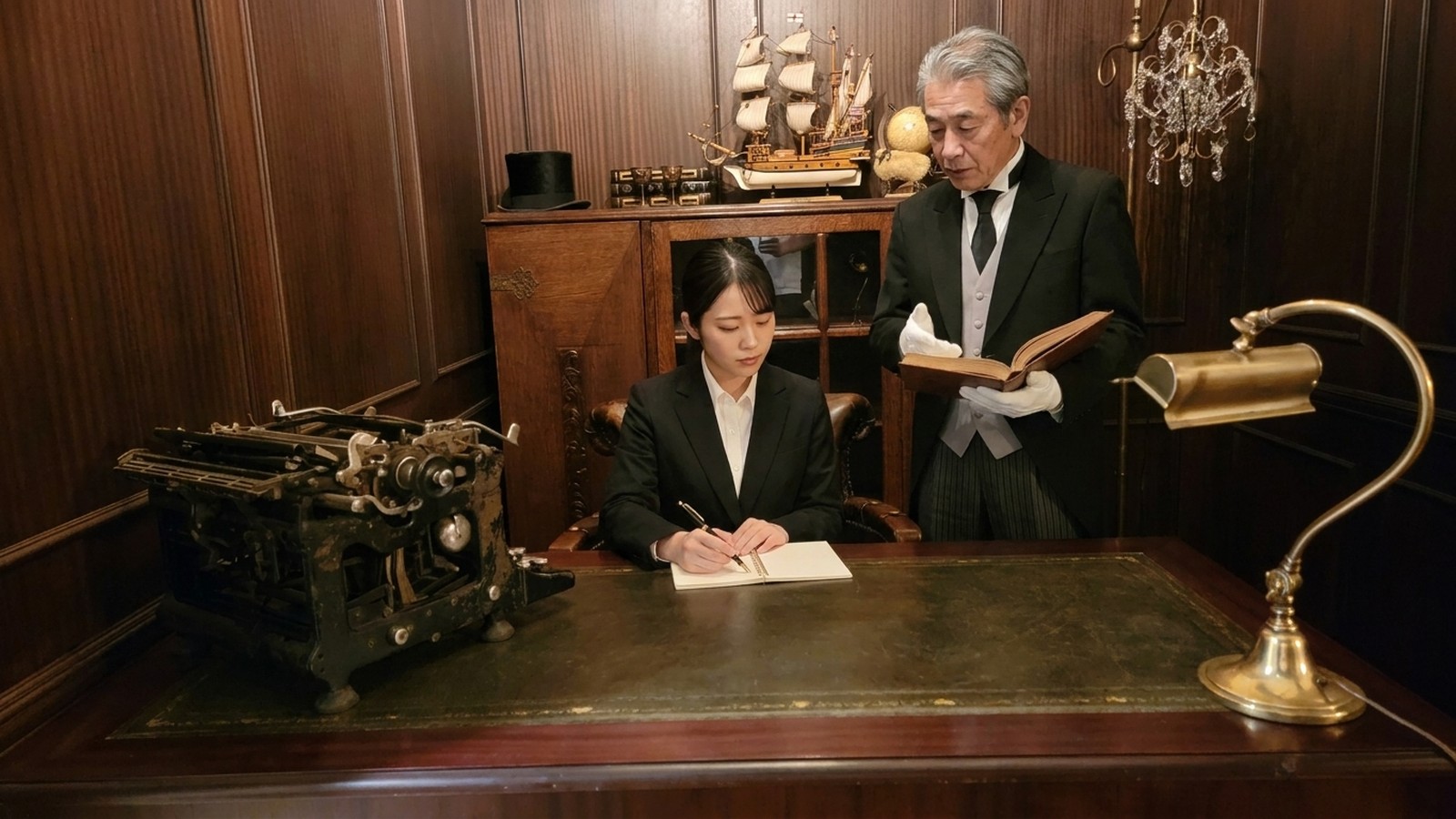 02
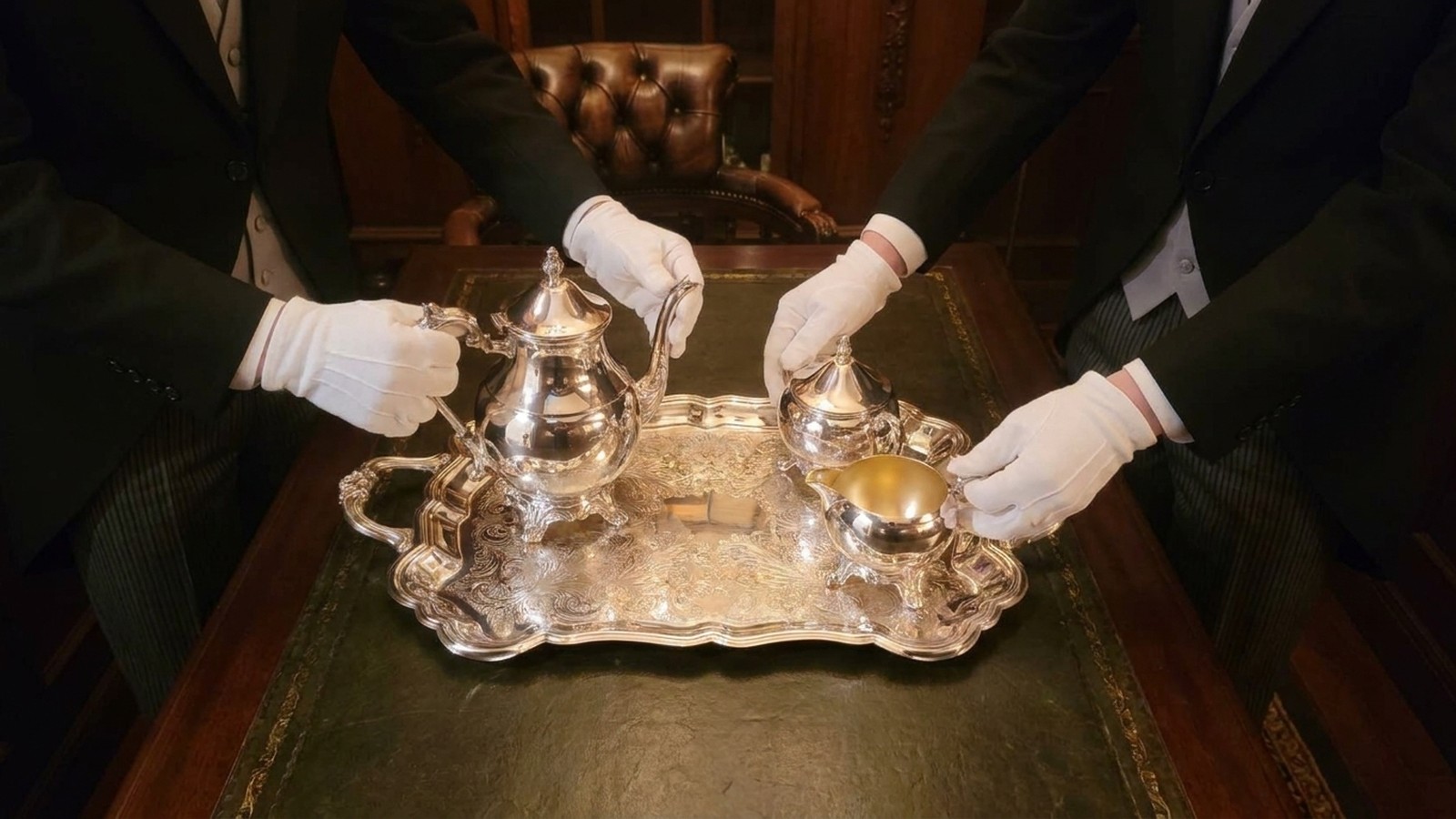
Groups small enough for the instructor to watch and correct each student's conduct directly. Sessions repeat in the same salon facilities, and the final examination checks the stability of the whole sequence.
 03
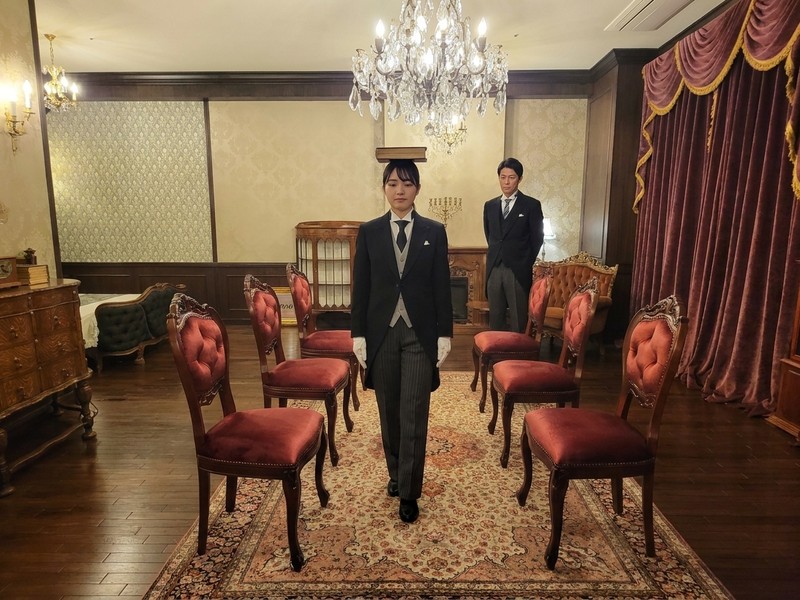
Table setting, service, receiving and seeing off guests, dressing in the butler's attire. Theory in lectures, practice in role play, and beyond the accuracy of the form, the ability to explain the judgement behind it.
 04
The instructors are butlers serving to the Association's standard. They pass on not a copy of the textbook but the forms used every day at work, and the reasons that produce those forms.
Those who complete a course and pass the final practical examination are awarded the Association's certification, a private qualification unique to the Association. The Academy's three courses correspond to its three tiers.
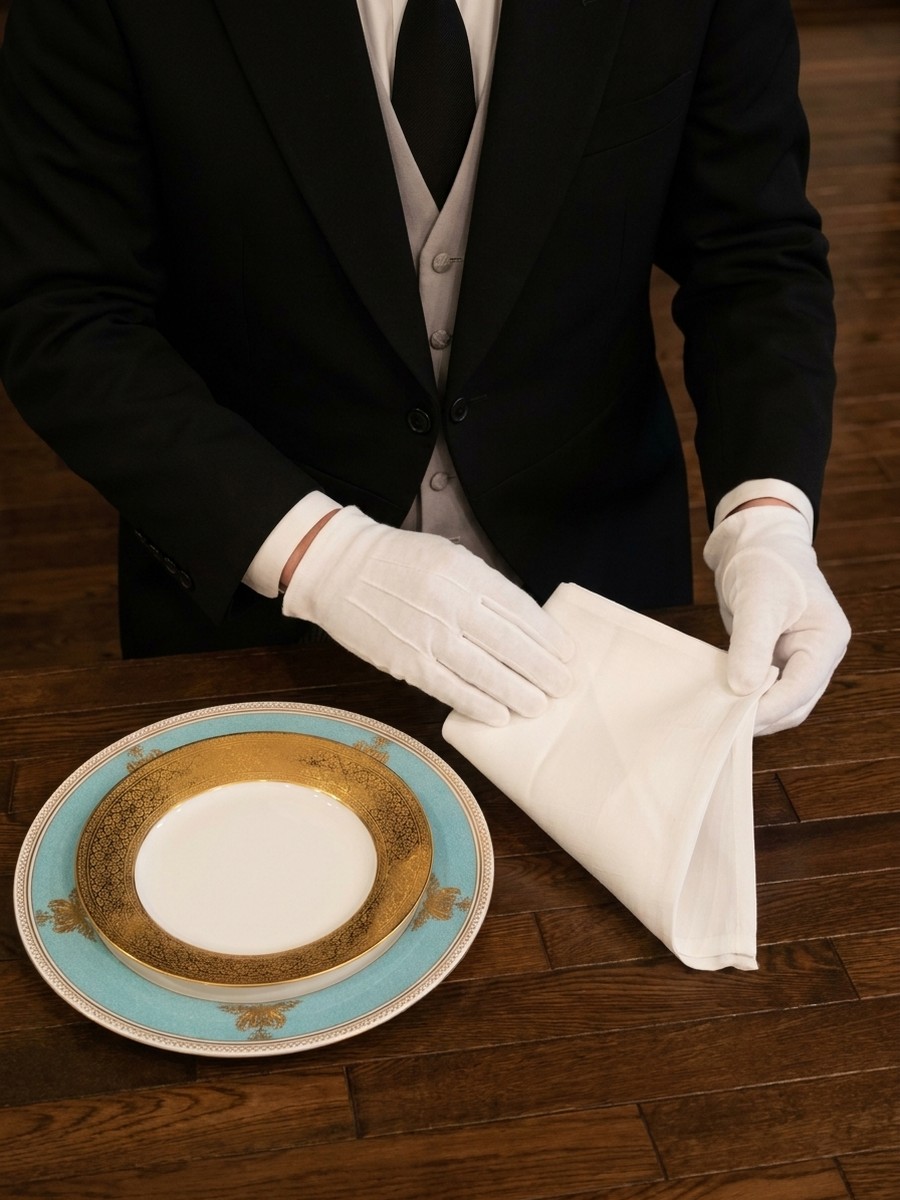
Awarded to those who complete the Essential Course and pass the practical examination — the Association's recognition that the basic forms of the butler have been acquired.
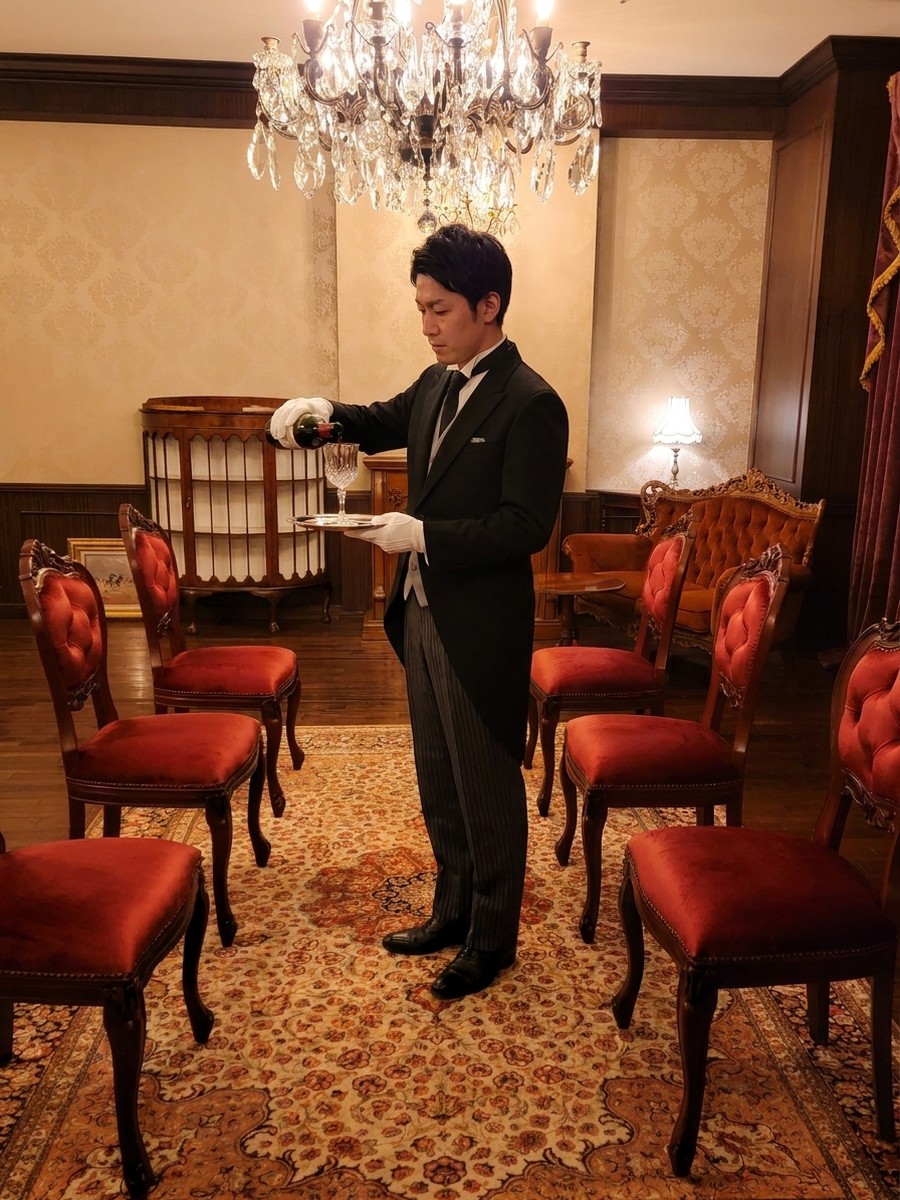
Awarded to those who complete the Advanced Course and pass the practical examination — recognition that the butler's forms can be applied steadily in settings including advanced reception and international protocol.
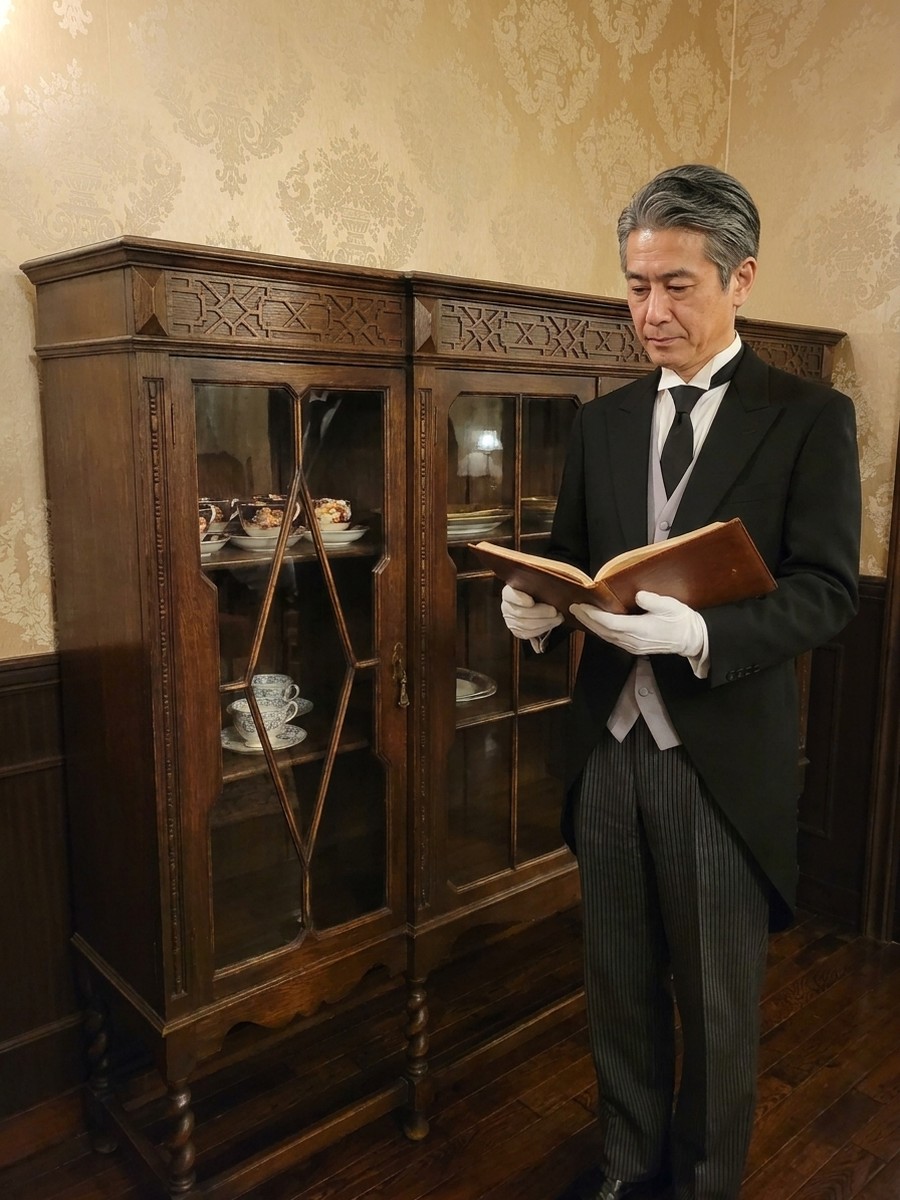
Awarded to those who complete the Master Course and pass the practical examination — the Association's highest certification, for those able to oversee the running of a whole household.
Each course is completed with the required attendance and a pass in the final practical examination. What the examination looks for is not flair but reproducibility of movement: order, timing and safety. Beyond accuracy of the form, students must be able to explain why that form is used.
Those who do not pass may retake the examination once free of charge. Confirming the results of study against a firm standard reflects the Association's certification system itself.
What the examination looks for is not one good attempt. It is repeatability: whether the same movement holds however often it is asked for, and whether an unexpected order can still be met.
Where a candidate does not pass, the specific shortfall against the standard is given. A failure without a reason stops a student's learning.
Standing before examiners brings out anxieties that ordinarily stay hidden: hands quicken, the gaze drops, the voice thins. How a person carries these on the day is part of what is observed.
Discipline is required of the examiners too. So that any examiner would reach the same judgement, the criteria are written down and aligned between instructors.
The Association values this examination because certification must be proof of ability, not proof of attendance.
Since a butler certified in the Association's name will stand before clients, the Association confirms through examination that the forms are stable and that the butler can explain the reasons behind them.
The Academy's final practical examination is the first gate placed at the entrance to the Association's certification system.

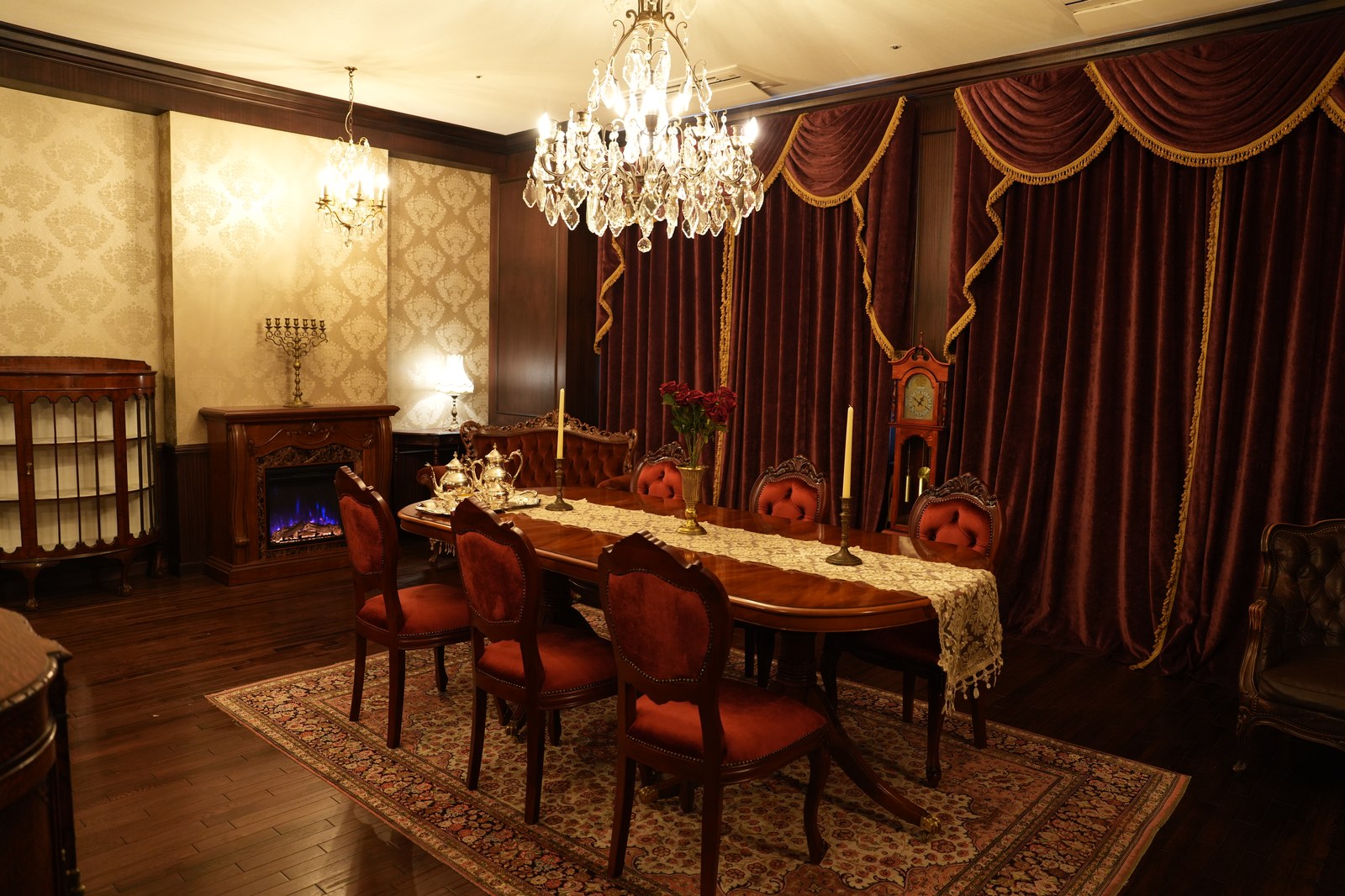
The Academy's main campus is in Aomi, Koto-ku, Tokyo (2-7-4) — Odaiba. The same house is home to Queen's Butler, the butler salon operated by the Association, so students practise service and bed-making with the very facilities in which guests are received.
There is a reason for repeating sessions in the same facility. If the equipment and the paths of movement change each time, the body learns adaptation to the room rather than the movement itself.
Practical sessions are also where students watch one another. Most habits a person cannot see in themselves become plain through the movements of others working at the same task.
Sharing the facility also holds down the cost of study. With no need to assemble equipment individually, the burden of enrolling can rest on acquiring skill itself.
Open days are offered in the same spirit. A sense of width and height that no text or photograph conveys is grasped at once by standing in the room.
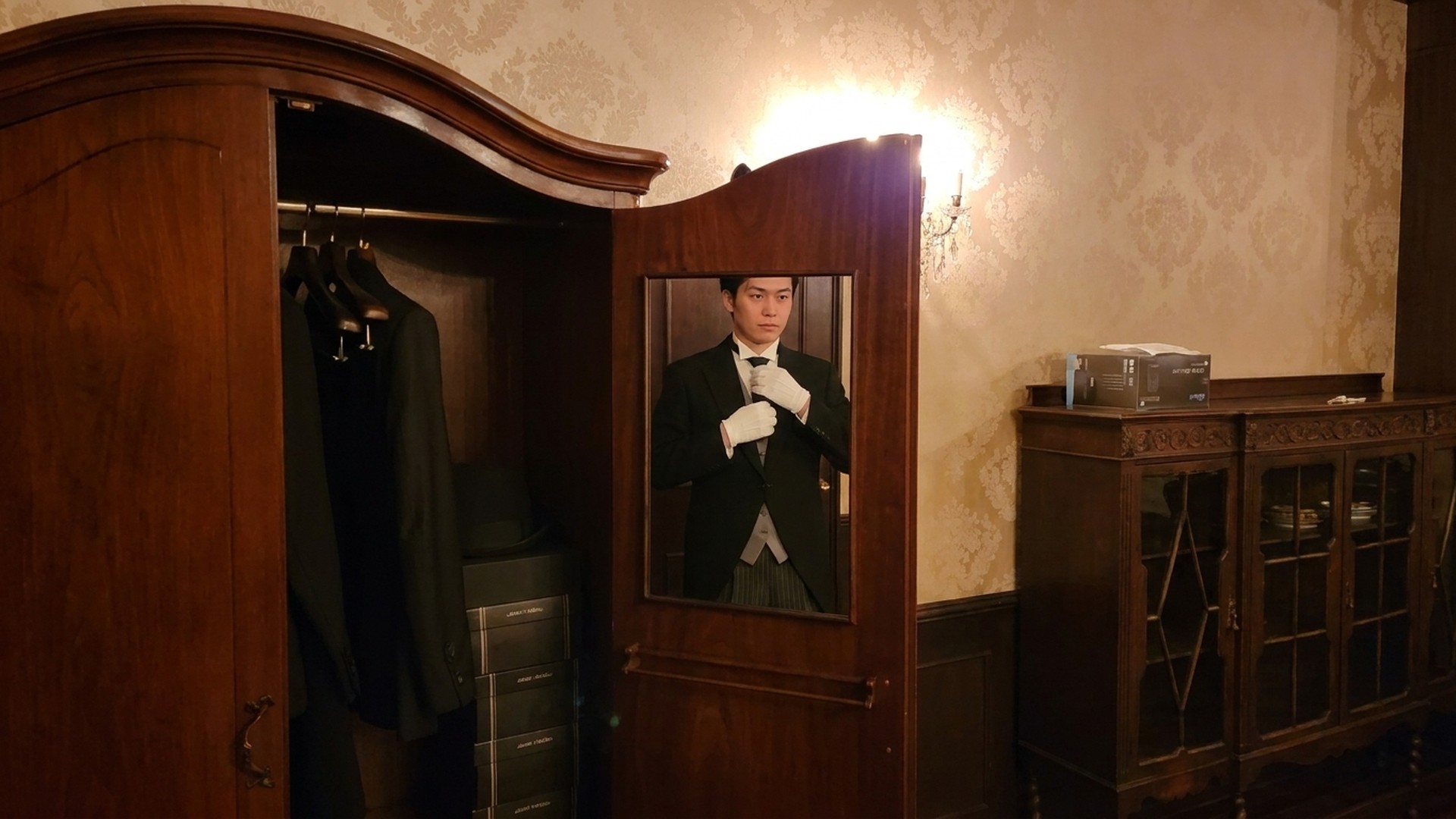
Dress is taught by the same rules as the supervised book: by day a black morning coat together with a grey waistcoat and an unpatterned black tie, by night a tailcoat with a white bow tie. Learning the rules of dress is part of what certification covers.
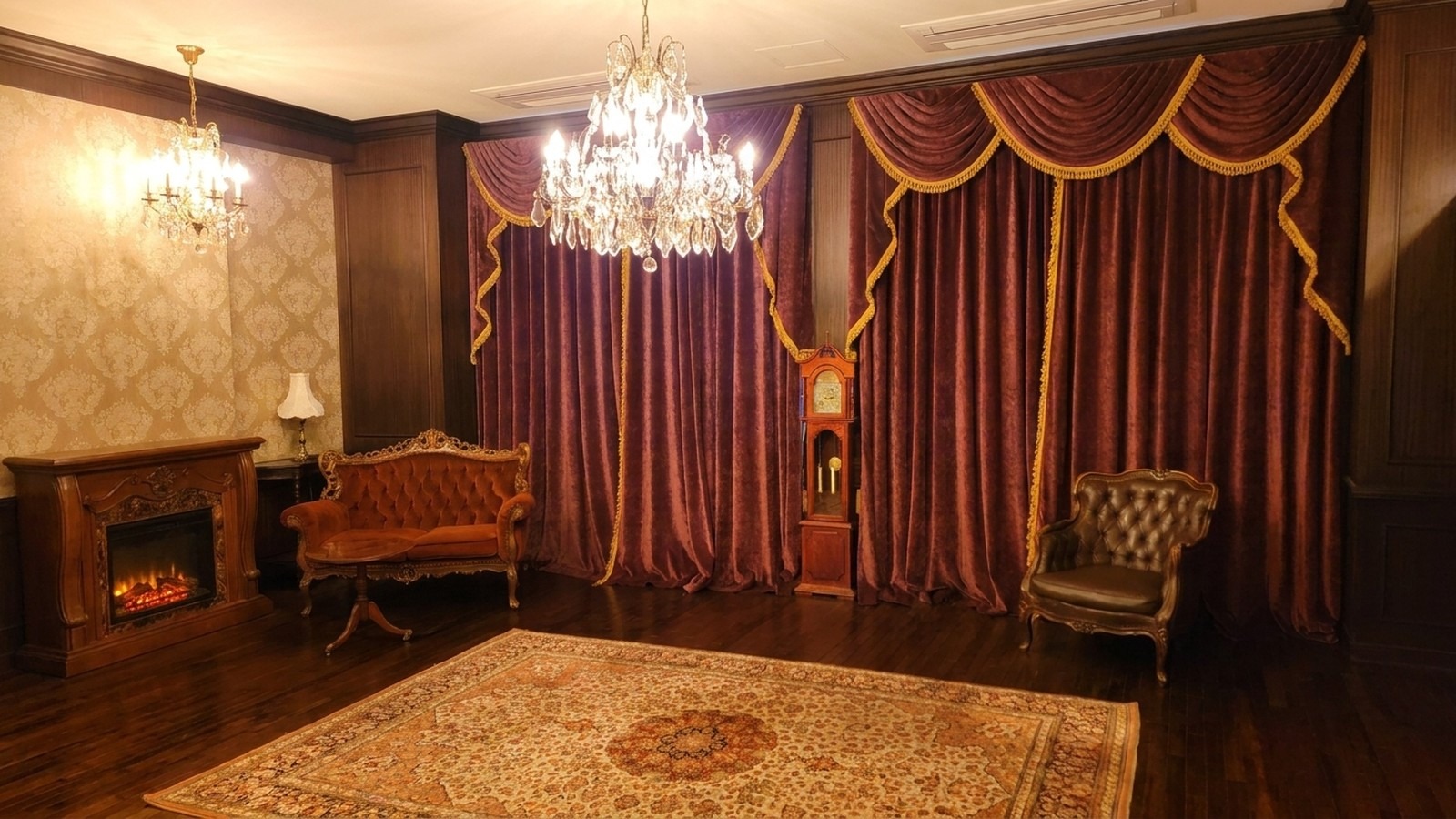
Study at the Academy leads on to the butler's path. Within the Association's related businesses are the settings where graduates put their skills to work.
 01
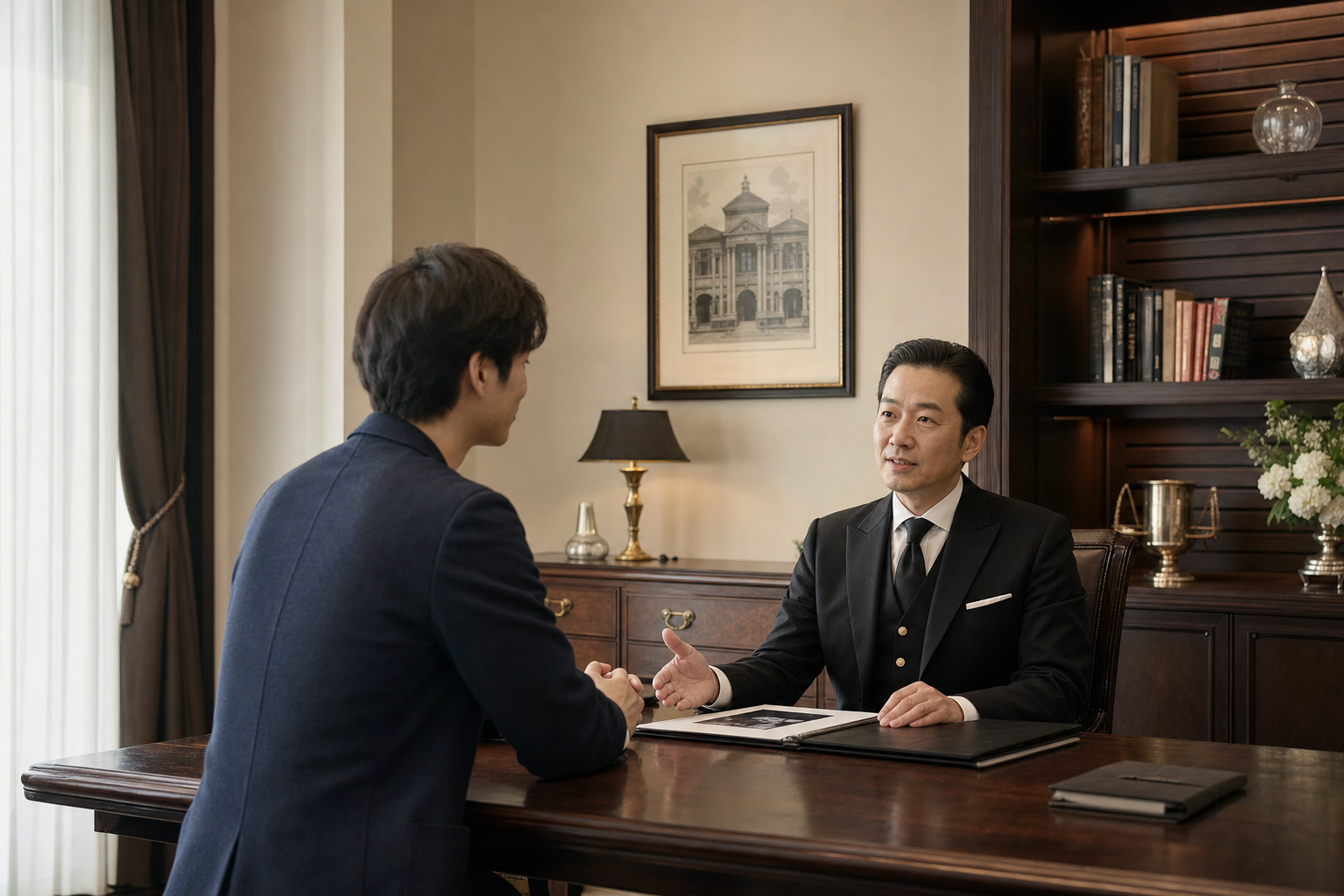
The Association's butler service. Serving households and companies, graduates use the forms learned at the Academy every day, and through the butler register become butlers chosen by clients.
 02
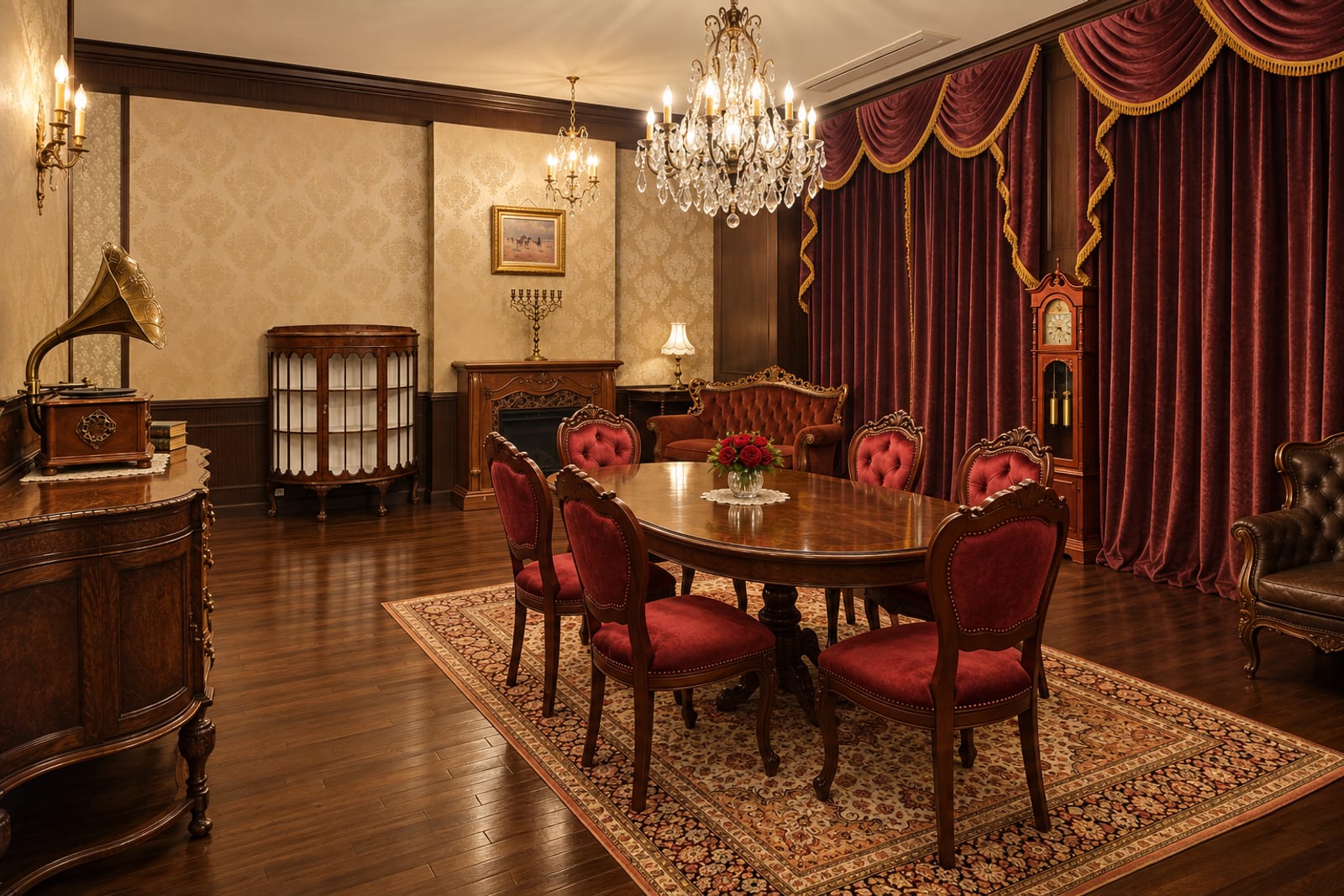
The butler salon in Odaiba that receives women guests. In the studio and the butler apprentice experience too, a butler is always present. The same house as the Academy becomes the workplace.
 03
Some students do not become butlers but take the conduct and judgement they have learned back to their companies and daily lives. For corporate training, the Association's corporate seminars are the point of contact.
Whatever the level of the course, the Academy's classes rest on three common pillars. Each is a chapter of our Butler Standards: the reasons are learned in lectures, the forms in practical work, and reproducibility is confirmed in the final practical examination.
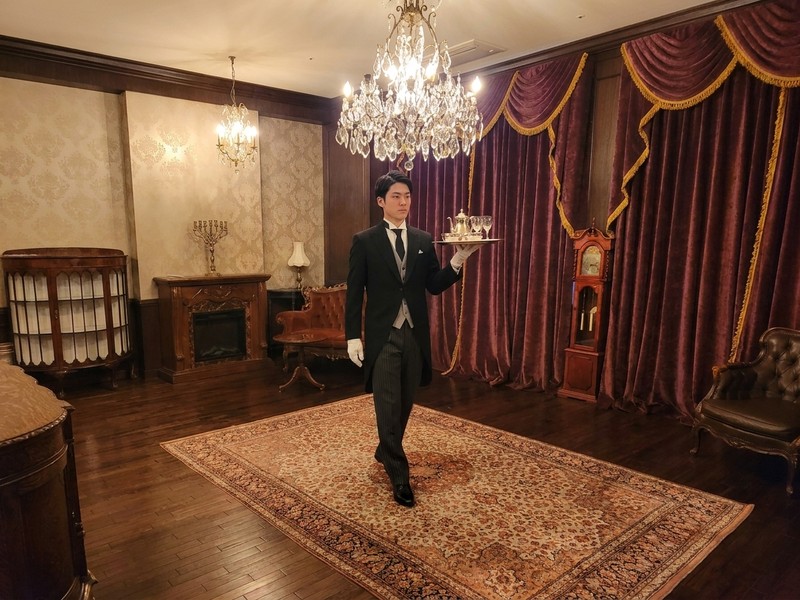 01
Laying the table, handling silver, serving and topping up drinks, clearing without disturbing the flow of the occasion. Repeated in the same practice facilities until order and timing are in the body.
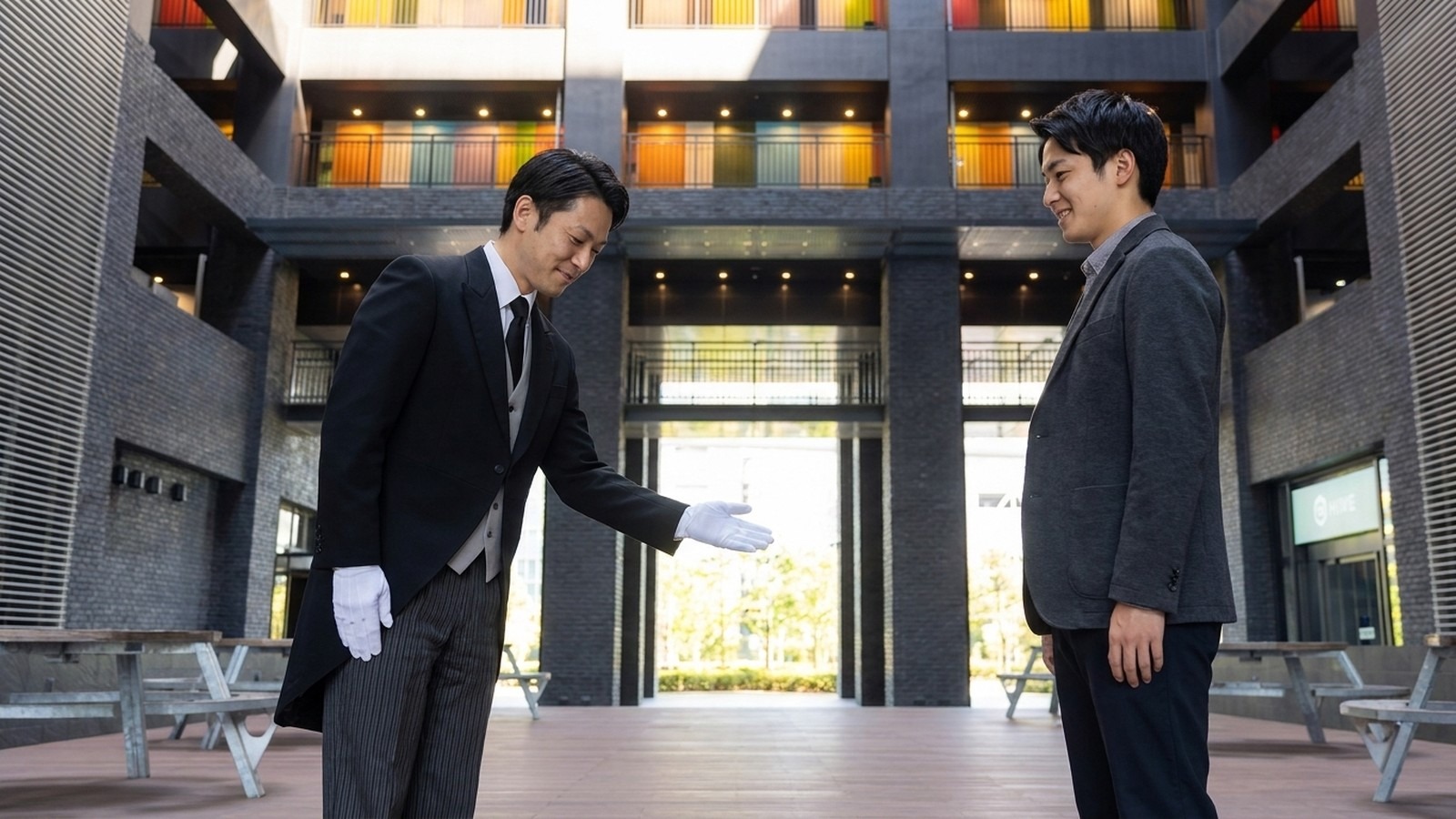 02
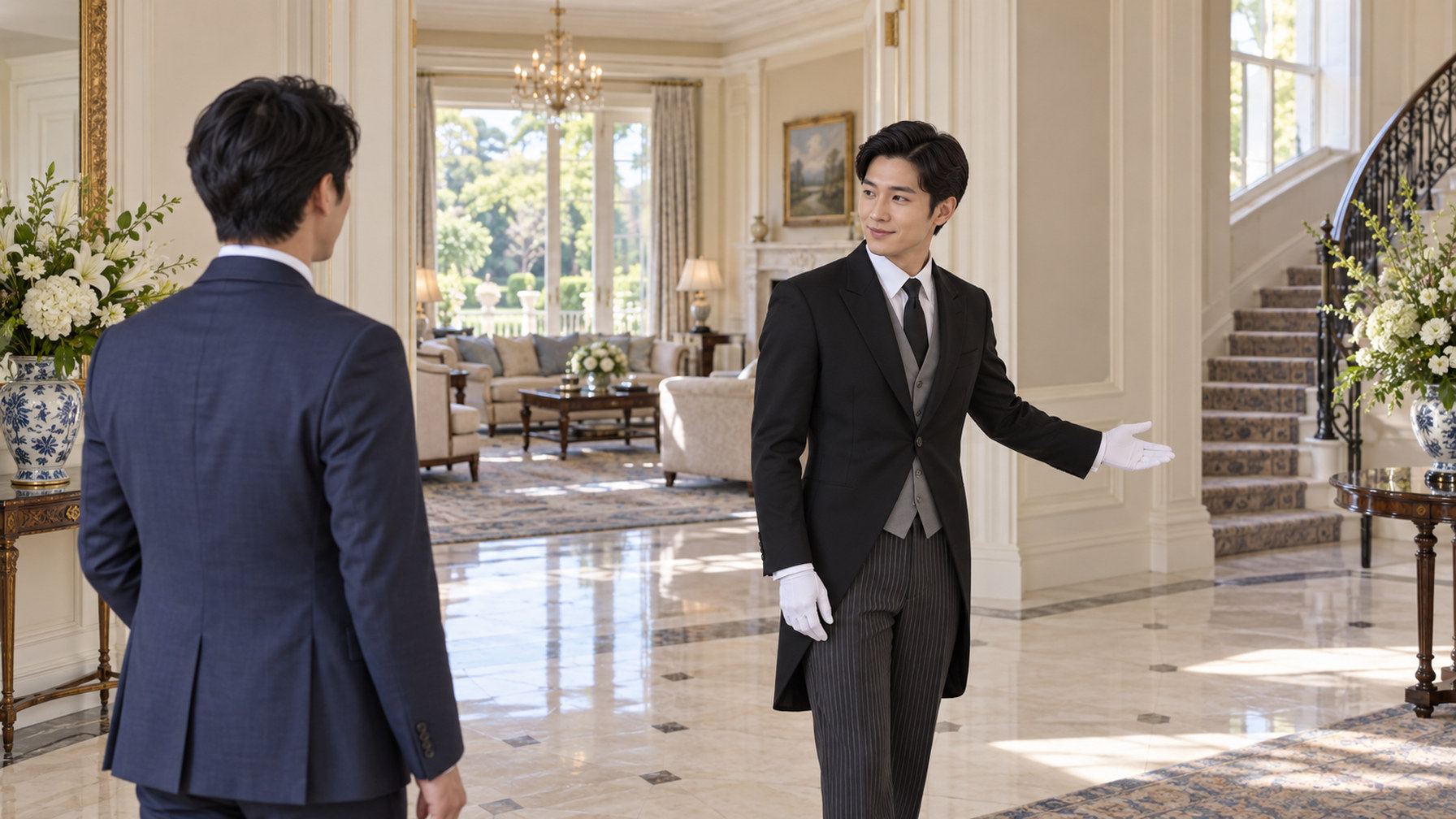
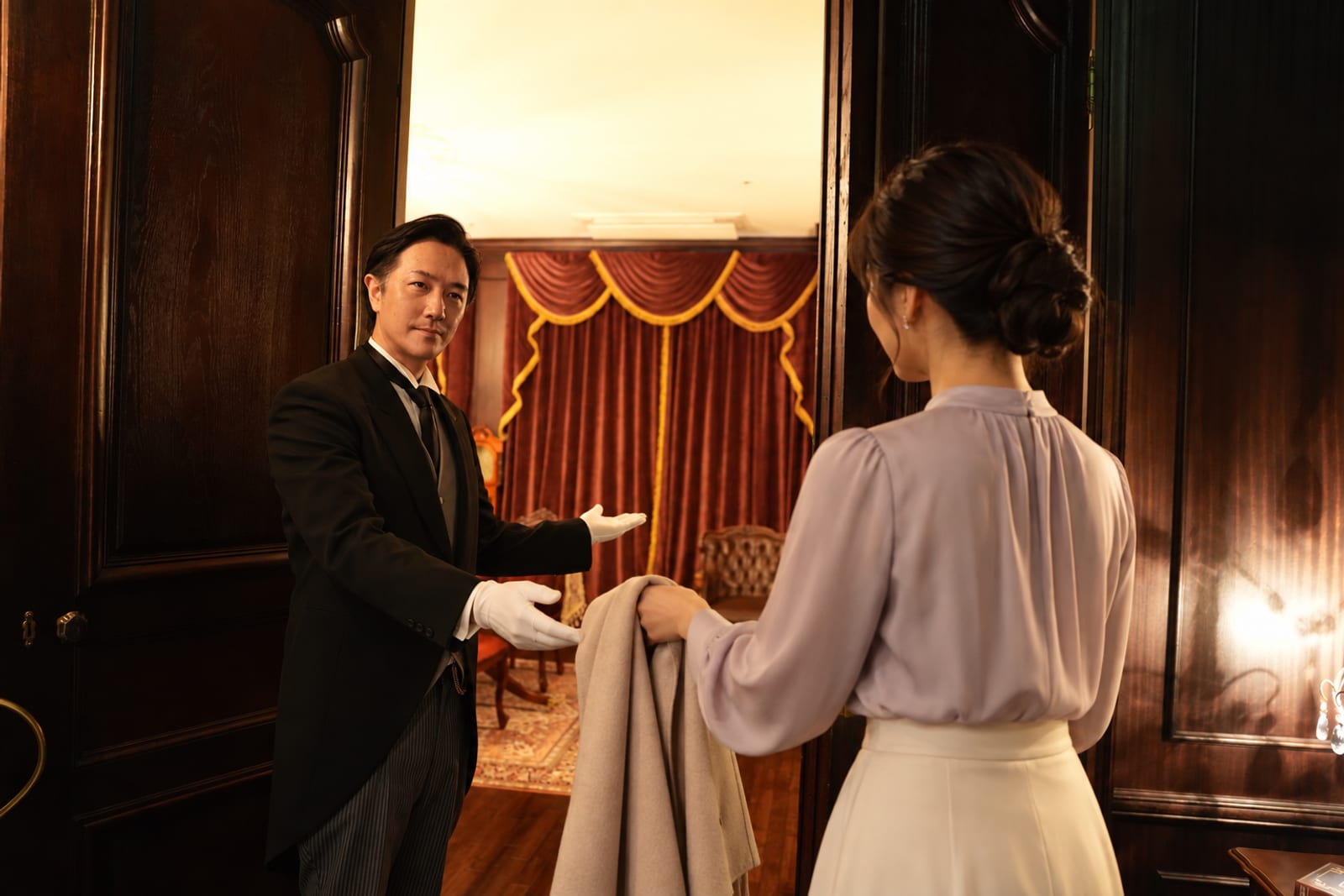
The bow at the entrance, taking coats and belongings, guiding to the room, the final bow. Forms of reception that hold whatever the number of guests or the setting, practised in role play.
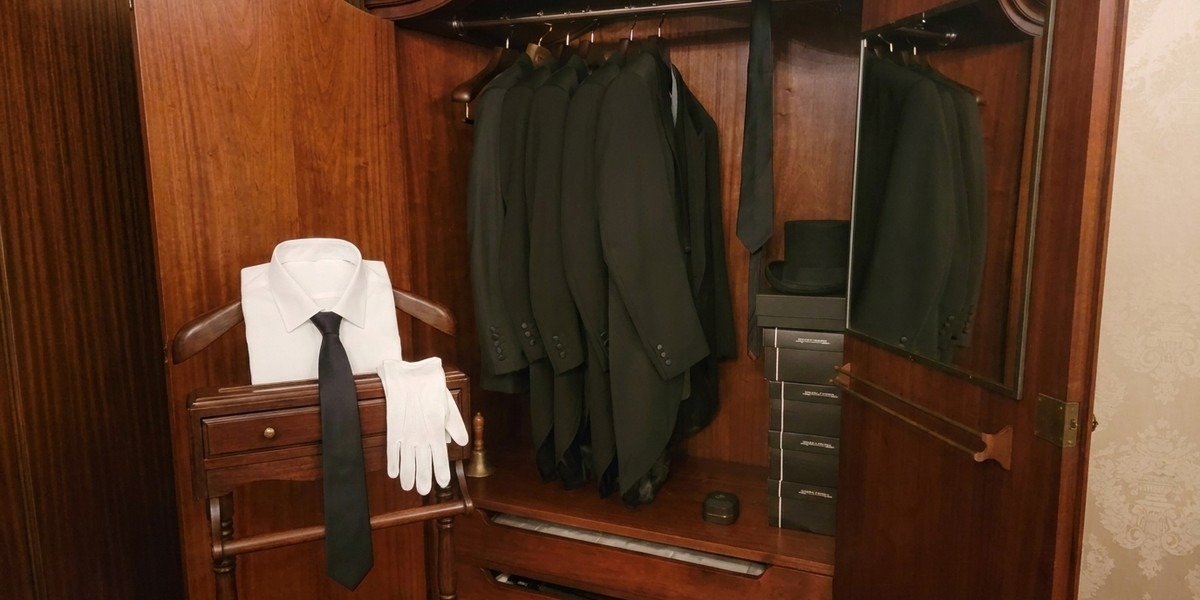 03
The rules of the butler's attire, dressing, and the standard of grooming, learned from the reasons behind them in line with the Association's standards and the supervised book.
Those who knock at the Academy's door are not only people who want the butler as a profession.
Some work in hospitality and want to raise the quality of their reception; some are secretaries or executive assistants who want to learn a butler's judgement; some are simply drawn to the butler's refinement.
The motives differ, but one attitude is asked of everyone: not just to memorise the forms but to be able to explain the reasons.
Many hesitate over which course to begin with. The guide is a view of how far one eventually wishes to serve; once that is settled, the necessary tier follows of itself.
Worth confirming before enrolling are how often you can attend and how much time you can give to review. The quality of learning is decided less by hours in the classroom than by what accumulates between them.
Specific questions about the work are welcome at the enquiry stage. Clearing up a misunderstanding beforehand serves both sides better than enrolling with it intact.
The first step is to request a brochure. Check the course content and schedule on the official site, apply, go through selection and wait for the course to open.
The attendance guideline and the conditions of the final practical examination are promises to know before you enrol. Grasping the whole certification system on the Association's page first, then deciding which course to start with, is the shortest route.
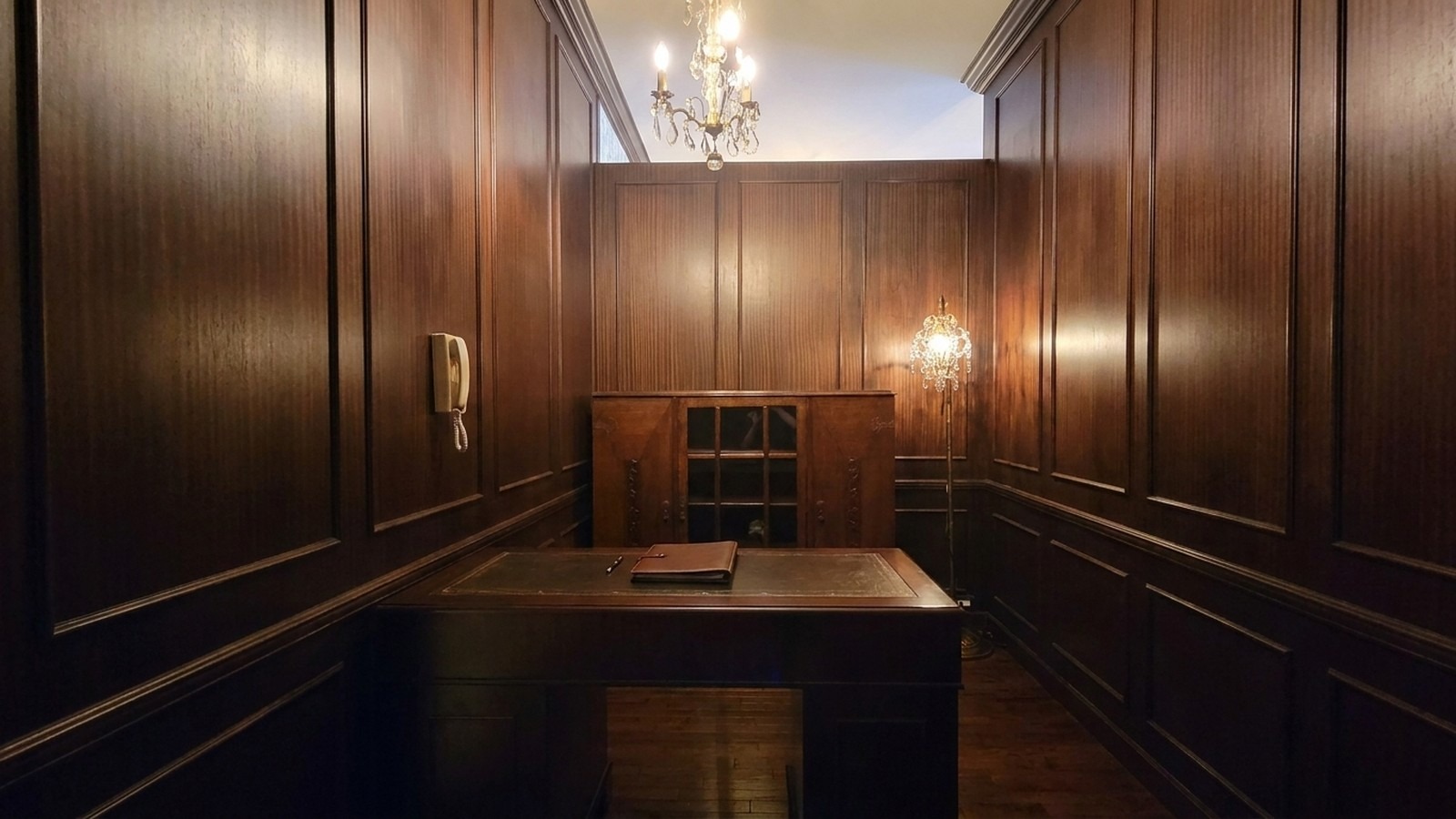
The Japan Butler Academy provides corporate training as well as courses for individuals.
Its official site carries guidance by industry — hotels, clinics, finance, retail, luxury sales, residences, automotive, chauffeurs — with training that transfers the butler's forms of reception to each workplace.
As the industry changes, the same courtesy appears differently. In medicine and in retail, the desirable distance and the pitch of the voice are not the same. That is why translation into procedure is needed.
In measuring the effect of training, the Association looks past the impression at the close of the day. Whether the forms remain within the company some months later is what shows the real result.
If even one person in a company can explain the forms, the effect of training lasts. That is why the Association recommends raising an instructor from among the participants.
Seminars for companies, run by the Association, carry its standard outward; by contrast, the Academy's corporate training is the place where that standard is translated into the procedures of each industry and acquired through practice.
Reception that holds only while the instructor is present is not a result; the training shares angles and timing in a form that lets a company keep the quality after the course ends.
The official site explains the steps from brochure request to the opening of the course. Set against the Association's certification system, they fall into four stages.

Confirm the course content, schedule and conditions. Which course to start with is best decided against the three tiers of the Association's certification system.
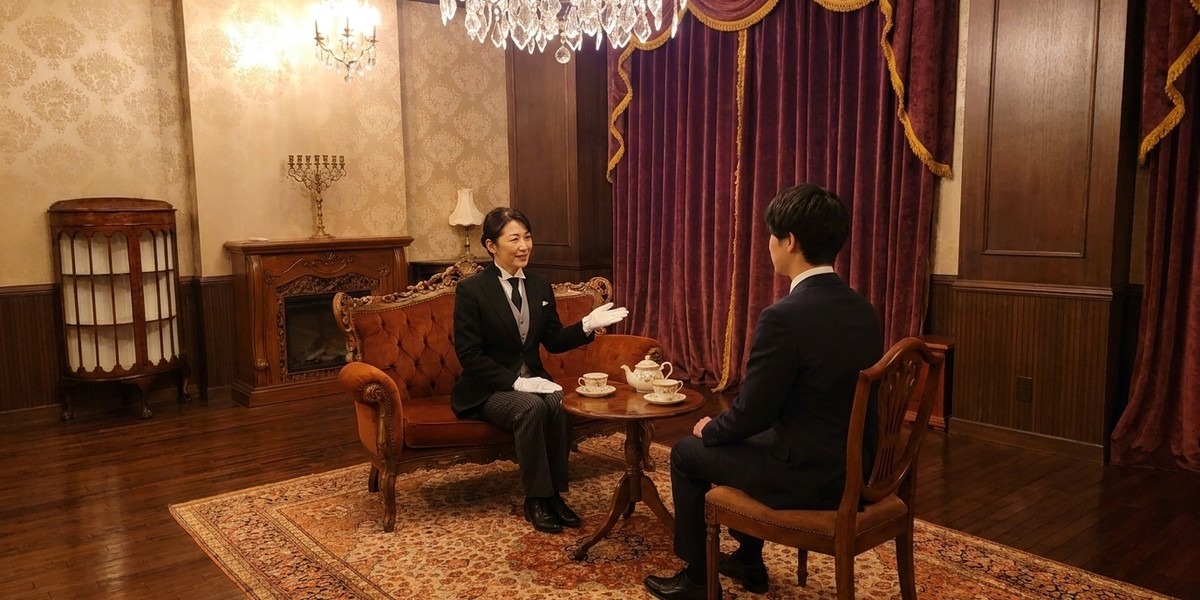
Can you study while working? Which level should you enter at? An individual consultation confirms the way of study that suits your experience and aims.

Enrolment is decided through application and selection. The attendance guideline and the conditions of the final practical examination are promises to confirm at this stage.
Study through weekend classes and on-demand video, then sit the final practical examination. Those who pass hold certification from the Association, leading on to THE BUTLER and Queen's Butler.
The Association introduces the Japan Butler Academy as a related site because it is the formal place of study for obtaining the Association's certification.
The certification system as a whole is set out on the Association's site; the concrete courses leading to it are on the Academy's official site.
The Association introduces the Academy as a related site in order to show the route to certification without concealment. If it is unclear where and what to study in order to reach certification, the system becomes a closed one.
Whether people come to the profession at all depends on whether the entrance to learning is visible. Keeping the course open to view is, for the Association, an investment in the future.
The question of where graduates work has an answer as well. A certified butler has somewhere to go, in the services the Association operates, so learning and work are not severed from one another.
Aspiring butlers and those who wish to study systematically should go to the Academy's official site; the tiers of certification and the training for companies are questions for the Association. The system as a whole belongs to the Association, the substance of each course to the Academy.

Course details, schedules, brochure requests and enrolment is arranged by way of the Japan Butler Academy's official site. If you are considering enrolling, please visit the official site.
Visit the Japan Butler Academy official siteThe Japan Butler Academy is the butler training institution operated by the Japan Butler Association. Its curriculum is the Association's standard itself, and it awards Association certification to those who complete a course and pass the practical examination. The main campus is in Odaiba, Tokyo (2-7-4 Aomi, Koto-ku).
Three courses: Essential (foundation), Advanced (applied) and Master (specialist). They correspond to the three tiers of the Association's certification system: Certified Associate Butler, Certified Professional Butler and Certified Master Butler.
A hybrid format of weekend classes in person combined with on-demand video lessons for preparation and review, in small groups. The instructors are butlers serving to the Association's standard, and the emphasis is on practical work such as table service, deportment and guest reception.
The required attendance plus a pass in the final practical examination. The examination looks at reproducibility of movement, order, timing and safety, and asks students to explain the judgement behind each form. Those who do not pass may retake the examination once free of charge.
The Japan Butler Academy is the education division of the Association. Butlers it trains put their skills to work at THE BUTLER, the Association's butler service, and at the butler salon Queen's Butler, so learning and practice are connected under the same Association.
Yes. The doors are open to people in hospitality who want to raise the quality of their reception, to secretaries and executive assistants who want to learn a butler's judgement, and to anyone drawn to the butler's refinement. One attitude is asked of everyone: not only to memorise the forms but to be able to explain the reasons.
Butlers serving to the Association's standard. They pass on not a copy of the textbook but the forms used every day at work and the reasons that produce them, and the final practical examination checks the stability of each form from the same viewpoint used at work: order, timing and safety.
Course details, schedules, brochure requests and applications are handled through the official site, butler-academy.jp.
Each official site is the point of contact for its own service. For the Association's certification system and corporate training, please contact us directly.